3 Types of Compost I Use for Healthier Container Garden Soil
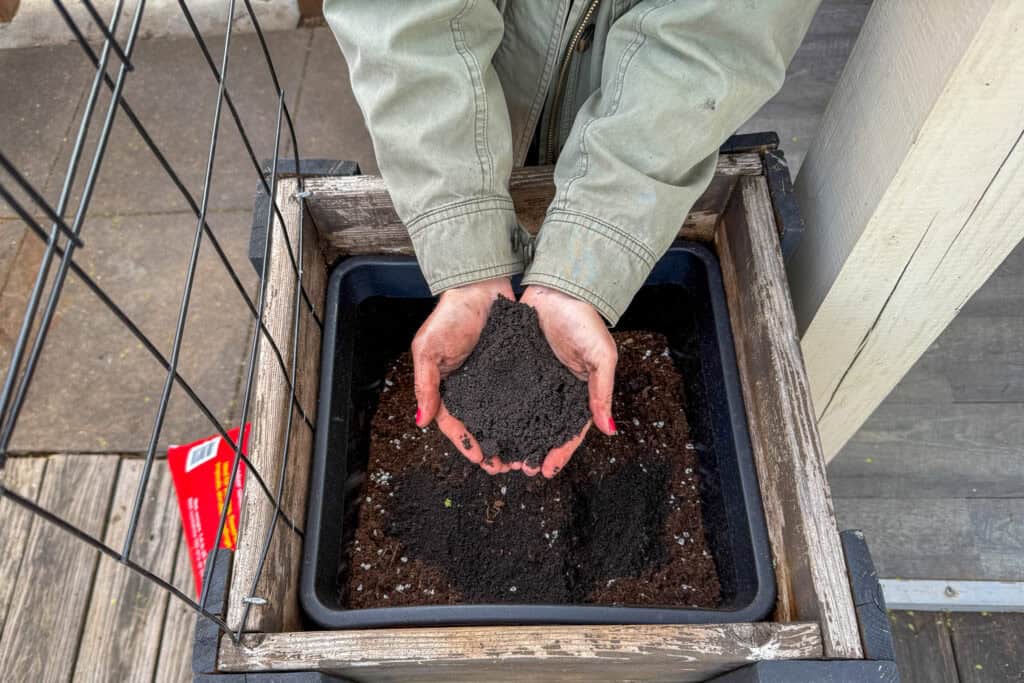
If you’ve ever had plants in your container vegetable garden struggle to grow or just not produce like you expected, your soil is likely the problem.
The main advantage of container gardening compared to in-ground gardens is that you’re in complete control of what your plants grow in.
Of course, this also means that you could really mess it up.
After more than eight years of container vegetable gardening – and so much trial and error – I’ve found that one of the simplest ways to build better soil is by using a combination of composts instead of relying on just one.
Here’s exactly how I do it and why it works.
Compost For Container Gardening
Your container soil mix isn’t just dirt – it’s made up of organic matter, minerals, air, water, and living organisms.
In raised beds or in-ground gardens, soil improves over time naturally. But in containers, nutrients get used up quickly and need to be replenished more intentionally.
This is partly because the container is usually smaller, so your plant roots are using up more of what’s in the soil. And also because each time you water, some of those minerals and organic matter get washed out.
This is where compost in container gardening comes in – it helps:
- Add nutrients (both macros and micronutrients)
- Improve water retention and drainage
- Feed beneficial microbes that make nutrients available to plants
If you’re only using potting soil in your container, you’re starting with a good base – but it’s not enough on it own to sustain growing vegetables in containers all season long.
How To Add Compost To Containers
Whether I am filling in a new container or amending the soil in an existing container, I always add in compost. Typically, I do this in early spring before planting out my containers.
This is the ratio I’ve used for many growing seasons:
- 2/3 high-quality potting mix
- 1/3 compost
For existing containers that just need their soil amended for the new growing season, replace no more than 1/3 of the soil.
There are several high-quality potting mix options to choose from – I prefer Fertilome. You can also make your own DIY potting mix for containers, which is more cost-effective and then add compost to it. The blend is pretty simple:
- 1/2 coconut coir or peat moss (moisture retention)
- 1/2 vermiculite (aeration and drainage)
Additionally, it’s good practice to add more compost between growing seasons and even throughout the growing season for those vegetable plants that are especially heavy feeders, like tomatoes.
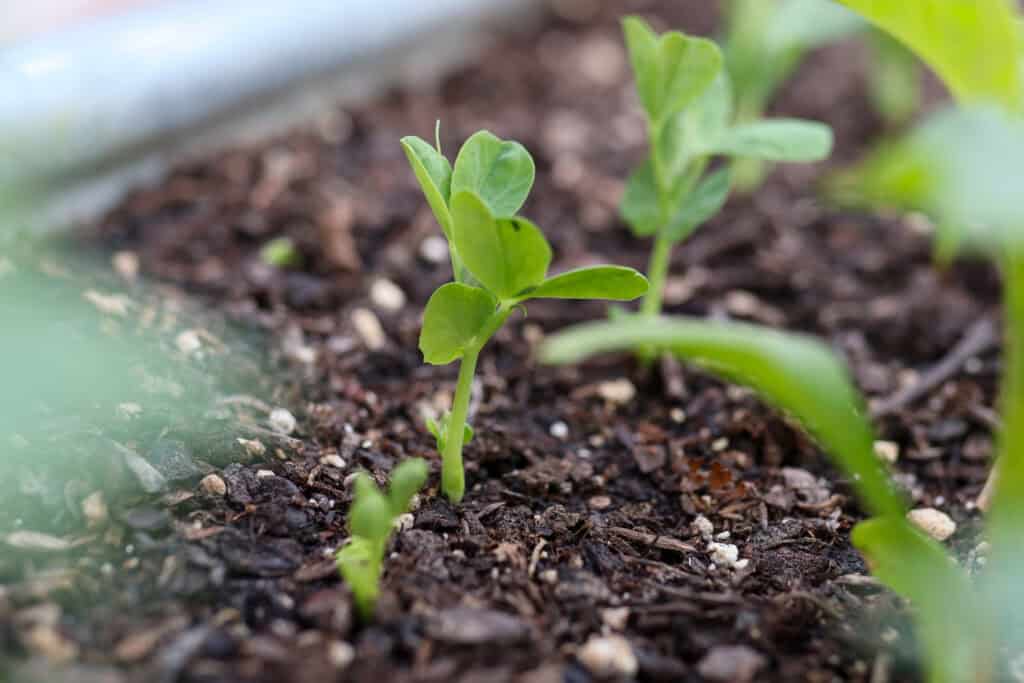
Types Of Compost For Vegetable Gardens
Each type of compost contains different micronutrient profiles.
Vegetable plants will thrive most when there is a variety and diversity of micronutrient available to it.
So, if you include different types of compost, you’ll be more likely to create a balanced organic soil for container vegetables that supports long-term plant health.

Best Compost For Container Gardening
Before I get into specifics, I want to say that any compost is better than no compost. This is just what has worked best for me over time.
1. Mushroom Compost
Mushroom compost has been a favorite of mine for a while.
It typically contains a range of nutrients like nitrogen, phosphorus, potassium, calcium, and magnesium, and is great at improving moisture retention in containers.
It’s also widely available and relatively affordable, which makes it an easy addition.
2. Worm Castings
If mushroom compost is your base, worm castings are your upgrade. If you’ve never heard of worm castings, let me help you out – it’s just worm poop.
Worm castings add additional micronutrients like sulfur, zinc, copper, and manganese – but more importantly, they help support beneficial microbial activity in your soil.
Think of worm castings less as a fertilizer and more as a biological booster that helps unlock nutrients already present in your mix.
I usually mix worm castings directly into my soil along with my other compost.
3. Cotton Burr Compost
This is one I’ve used for years, and it’s become a staple in my containers.
Cotton burr compost adds organic matter that supports soil life, and I like to use it as a mulch layer rather than mixing it in.
As a mulch, it:
- Helps regulate soil temperature
- Reduces moisture loss
- Slowly breaks down and feeds the soil over time
And honestly, it just looks good. My garden is part of our backyard living space, so having containers that look clean and finished matters to me.
So, there you have it – those are the three types of compost I use and why.
How Much Compost To Use In Containers
It’s easy to think more compost = better results, but that’s not always the case.
If your mix has too much compost, it can temporarily tie up nitrogen as it breaks down.
That means your plants may actually struggle to access the nutrients they need.
That’s why I stick to about 30–35% compost in my mixes. It’s enough to improve the soil without causing imbalance.
Final Thoughts On Building Healthy Container Soil
If there’s one thing I’ve learned with container gardening, it’s that healthy soil makes everything easier.
When you focus on building a better soil mix from the start, your plants grow stronger, produce more, and require fewer interventions throughout the season.
Start with compost, experiment with what works for you, and over time, your containers will only get better.
Container Garden Soil Recipe
To recap, my container mix formula is:
- 2 parts high-quality potting soil
- 1 part compost blend (mushroom compost + worm castings)
- Cotton burr compost as a top mulch layer
