Best Vegetables to Grow in Containers
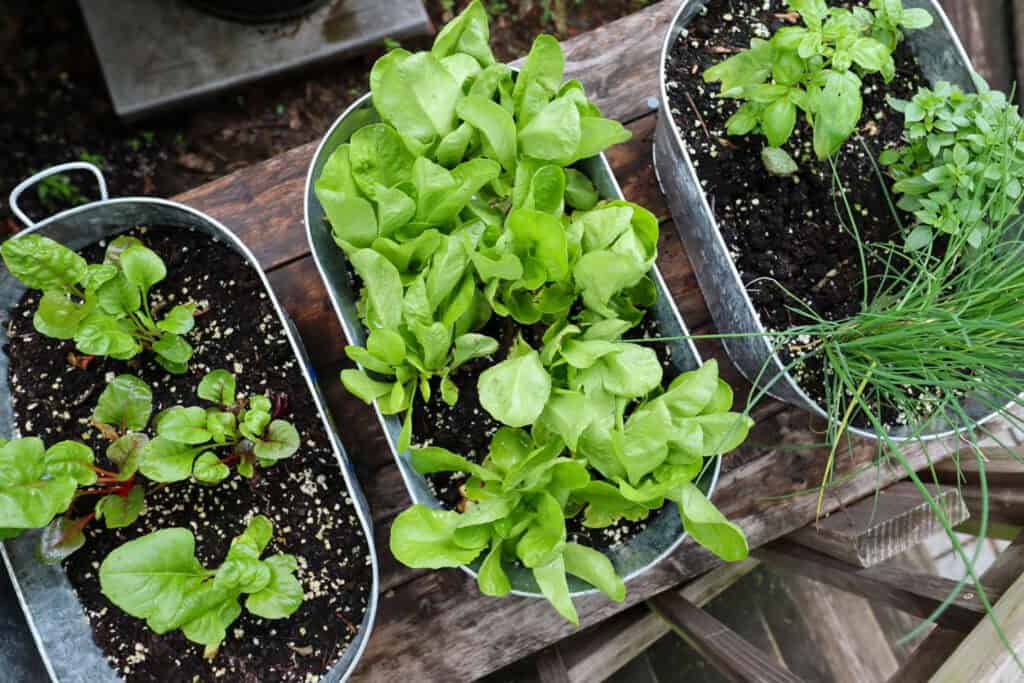
If you are new to vegetable gardening, growing in containers is one of the easiest ways to start.
You do not need a huge yard, a costly setup, or years of experience to grow vegetables at home.
A sunny patio, deck, balcony, or even a driveway can become a productive garden when you match the right vegetable to the right container.
That’s one of the reasons I still love container gardening so much.
I’ve been growing vegetables for over eight years, and container gardens are what I recommend to all beginners.
When I first started gardening, I was growing in a very small space, and I was honestly surprised by how much food I could grow on my back deck with just a few containers and some good soil.
Even though I have more space now, I still love growing in containers because I don’t have to mess with native soil, I can move plants around when the sun shifts, and I can grow right on my concrete patio.
For beginners, the ease of container gardening makes gardening feel a whole lot more approachable.
What Makes A Vegetable Good For Containers?
The truth is that not every vegetable is a great fit for container gardening.
The best container vegetables are usually compact, productive, and simple to manage.
They either stay smaller, have a manageable root system, or keep producing without needing a giant pot or a complicated support setup.
That’s why some vegetables are much easier to recommend for beginners than others.
Before you choose what to grow, it also helps to remember a few basics.
Your container needs drainage.
Your pot should be filled with quality potting soil, not dirt from the yard.
And the amount of sun you get matters a lot.
Fruiting crops like tomatoes, peppers, and beans usually need full sun, while leafy greens and asian greens are more flexible.
Once you have those basics covered, the real question becomes: which vegetables are actually the easiest and most worth growing in containers?

1. Cut-And-Come-Again Greens
If you want the easiest container vegetables to keep harvesting from over and over, start with cut-and-come-again greens.
These are vegetables you can harvest a little at a time instead of all at once. For container gardeners, that is a big advantage because one pot can stay productive for a long time.
For example, think about a leaf lettuce, which you can cut individual pieces along the outside and it will keep growing more from the center. That compared to a head lettuce, like buttercrunch, where you would wait for the plant to grow to maturity and harvest the entire head.
Personally, I would rather have a continual harvest throughout the growing season than wait weeks to be able to harvest one head of lettuce.
These cut-and-come-again greens are especially good for beginners because they grow quickly, do not need a huge pot, and can handle a little less sun than crops like tomatoes or peppers.
If your space is bright but not blazing hot all day, greens are often a smart place to start.
Leaf Lettuce
Leaf lettuces are commonly recommended for containers because they are easy to seed, harvest often, and replant through the season.
There are also so many varieties to choose from, which makes it feel like you’re growing more options than just a standard lettuce, which I know isn’t the most exciting.
Spinach
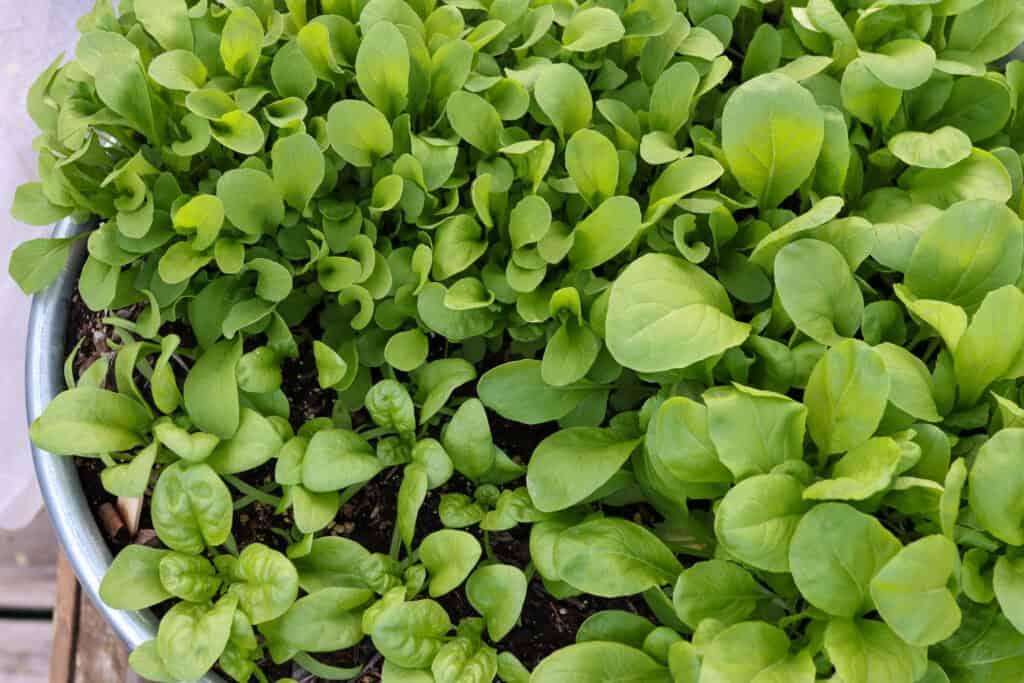
Spinach grows quickly, so it is easy to direct sow into your container. Like leaf lettuces, there are many varieties of spinach to choose from – I personally love mustard spinach.
Arugula
If you love the peppery taste of arugula, you should definitely grow some in a container! It does great growing directly from seed.
Swiss Chard
Swiss chard is one of the easiest vegetables I have ever grown in a container.
It is one of my personal favorites because it does well in sun or shade, handles a wider range of temperatures than a lot of other crops, and it honestly looks beautiful in the garden.
It gives you a lot back from a relatively small space. One plant can stay productive for quite a while.
Kale
Kale is great in containers and there are so many varieties to choose from. You can pick outer leaves as the plant continues growing, which helps the container stay useful longer.
Kale is also one of those vegetables that feels pretty forgiving. It handles cool weather well, and it is a nice option for spring and fall container gardening.
2. Asian Greens
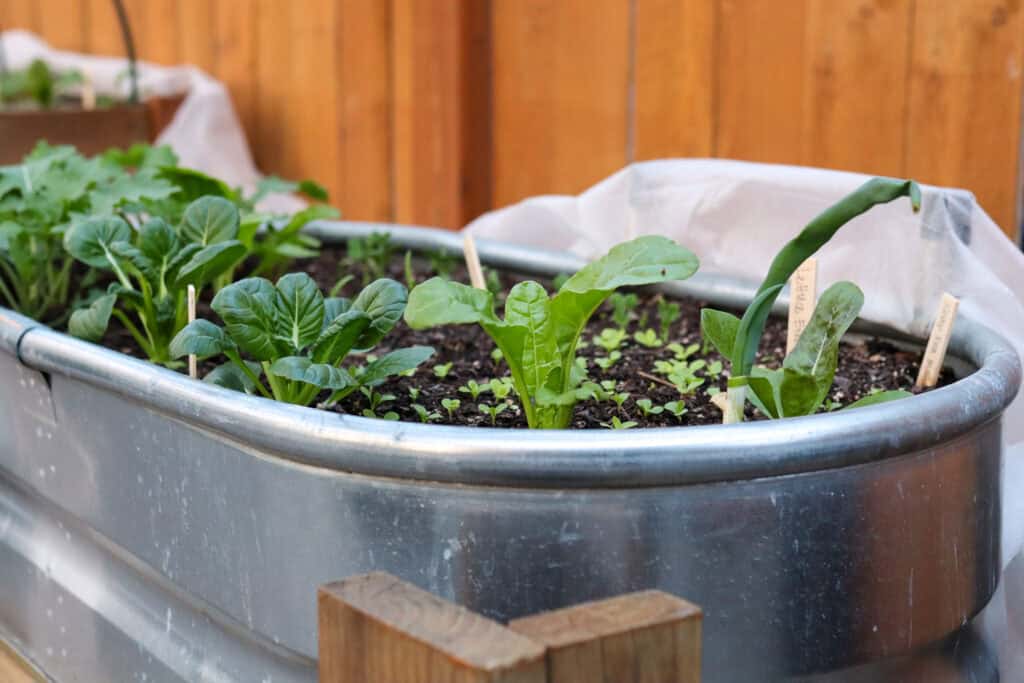
I love growing bok choy and pak choi in containers. They don’t take up much space and they grow quickly.
There are many different types of asian greens! Just make sure you’re choosing the more compact types. Tatsoi, for example, can spread out so might not be great for small containers.
3. Bush Beans
Bush beans are one of the best vegetables to grow in containers if you want something that feels productive fast.
Bush beans are compact bean plants that grow in a short, bushy form instead of climbing like pole beans. Most gardeners grow bush beans as fresh snap beans, including green beans.
They grow more compactly than pole beans, so you do not need a tall trellis or a complicated support system. That makes them much easier for beginners to manage.
Container guidance commonly recommends bush or compact varieties for this reason.
Bush beans are also satisfying because they can produce a good amount in a relatively small space. If you want your container garden to feel like it is really feeding you, beans help with that.
They do need full sun and consistent moisture, but overall, they are one of the more beginner-friendly summer vegetables you can grow in pots.
4. Peppers
Peppers are one of the best fruiting vegetables for container gardening.
They stay relatively compact, they look tidy in a pot, and they are easier to manage than something big and sprawling.
If you want to grow vegetables that feel a little more substantial than greens, peppers are a really good next step.
Peppers are consistently listed among reliable container crops when the pot is large enough and gets enough sun.
They do best in warm weather, with full sun and regular watering. They also need a container large enough to hold enough soil so they do not dry out too quickly.
But once you give them that, they are usually very manageable.
A 5-gallon pot can work well for smaller peppers.
I personally have grown bell peppers and poblano peppers in containers.
5. Cherry Tomatoes and Patio Variety Tomatoes
A lot of people want to grow tomatoes first, and yes, tomatoes can absolutely grow well in containers.
But if you are new, I think cherry tomatoes or the smaller patio varieties are usually the best place to start.
They are generally easier to manage than large slicing tomatoes, and they fit container gardening much better than oversized tomato plants that keep getting taller, heavier, and thirstier all season long.
Patio and smaller tomato types are commonly recommended over larger vining types for containers. The larger tomato varieties really need something bigger than a container because they establish a large root system and need soil that won’t dry out quickly.
Cherry tomatoes still need full sun, steady watering, and support, but they are usually much more realistic for beginners.
This is where container size matters too. Tomatoes need enough soil and enough room for their roots, so this is not the crop to cram into a tiny pot and hope for the best.
If you want the joy of growing tomatoes without taking on more than you need your first year, cherry tomatoes are a very smart pick.
6. Radishes
Radishes are one of the fastest vegetables you can grow, which makes them great for beginners.
They are quick, easy, and satisfying.
You do not have to wait forever to see results, and that matters when you are just getting started and trying to build confidence.
Radishes are also commonly recommended for containers because they stay small and grow well in loose, well-drained mixes.
If you are someone who likes quick wins, radishes are one of the best vegetables to add to your first container garden.

7. Carrots
Carrots can do surprisingly well in containers when the setup is right.
The key is depth and loose soil. A shallow pot is not going to give you good carrots, but a deeper container at least 10 to 12 inches deep filled with fluffy potting soil can work very well.
I think carrots sometimes get overlooked in container gardening because people assume root vegetables are harder than they really are. But if you choose the right container, they can be a very rewarding crop to grow.
Just know they have a long growing season, so you’ll need some patience.
For beginners, I would lean toward shorter carrot varieties rather than very long ones. They tend to be a better fit for containers and a little more beginner friendly.
8. Beets
Beets are another root vegetable that works well in containers, and one of the nice things about them is that you get more than one harvest from the same plant.
You get the beet itself, but you also get the greens, which are delicious in salads and on sandwiches.
That makes beets feel especially worthwhile in a small garden because they give you more use out of the space.
Like carrots and radishes, they do best when the soil stays evenly moist and the container is deep enough.
9. Herbs
If I had to recommend one plant for beginner vegetable gardeners to grow, it would be herbs.
They are so useful – and who likes buying a $4.00 plastic herb pack from the store only to need one or two sprigs?
I put my herb containers right outside my kitchen door for easy access when I’m cooking.
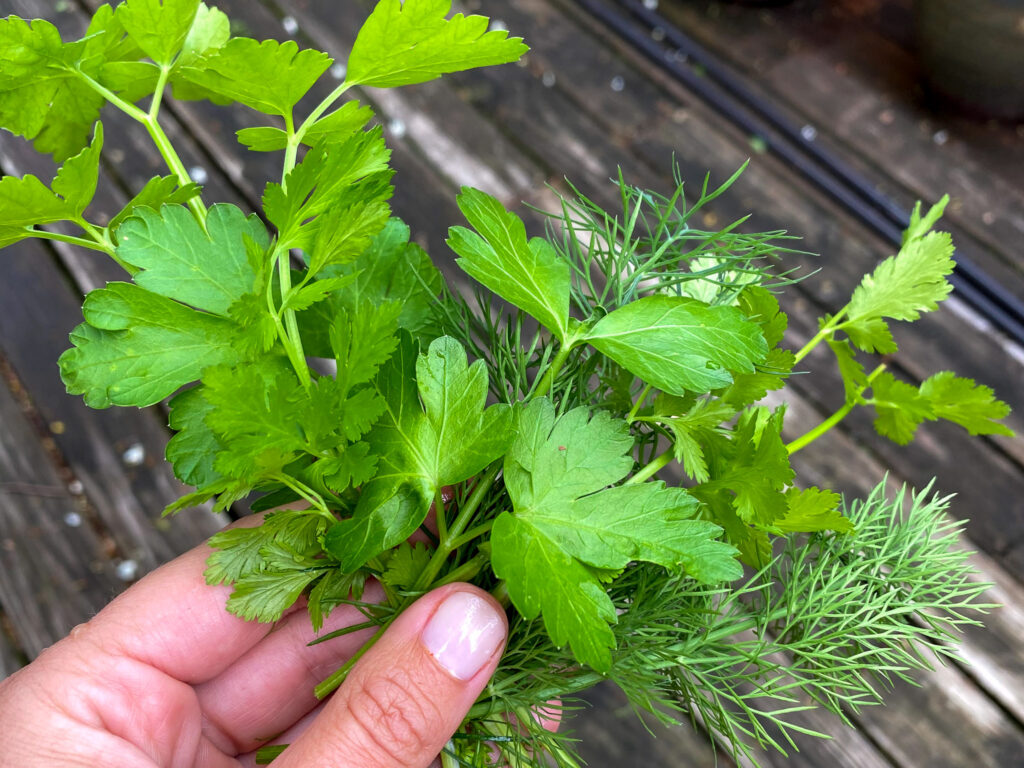
I grow sage, thyme, oregano, rosemary, parsley, cilantro, chives, and basil in containers – there are so many great herbs and varieties to choose from!
My favorite way to use herbs is making sauces that I can slather all over everything.
10. Eggplant
Eggplant can do very well in containers, especially smaller varieties.
It likes warm weather, full sun, and a pot with enough soil to hold moisture, but once it gets going, it is a productive and surprisingly container-friendly crop.
11. Green Onions
I personally use green onions in so many dishes, so I love growing them.
Green onions are one of the easiest vegetables to grow in containers because they do not need much room and are simple to harvest.
You can even purchase organic green onions from the store, plant them in your garden, and have a continual harvest from them – when you cut them back to the base of the stem, they’ll put out more leaves!
What Does Not Do Well In Containers?
Not every vegetable is worth the effort in a pot.
In general, the vegetables that struggle most in containers are the ones that get very large, need a lot of root space, or sprawl so aggressively that they quickly outgrow the setup.
These are vegetables like watermelon, winter squash, cabbage, broccoli, pumpkins, and crops that need large trellis systems to grow vertically – although, you can purchase or build larger containers that would work well for crops that need a small trellis, like peas, small cucumbers, and pole beans.
The larger vegetable plants take up a lot of room, dry out quickly, and are harder to keep consistently happy in a limited amount of soil.
That does not mean they are impossible.
It just means they are usually more trouble than they are worth, especially for a beginner.
Containers work best when the plant and the pot actually match. If the root system is too restricted, the plant is not going to grow well no matter how much you want it to.
This is one of the reasons I usually point beginners toward smaller, more manageable crops first.

The Best Vegetables To Start With First
If all of this still feels like a lot, here is my honest advice: start small.
That is probably the best thing a beginner can do.
You do not need to grow everything your first season. In fact, if you try to do too much, you will probably get overwhelmed and not want to do it again next year.
A better plan is to start with just a few containers and choose vegetables that are likely to give you a good experience.
Final Thoughts
Growing vegetables can be so incredibly rewarding.
The best vegetables to grow in containers are the ones that match your space, your sunlight, and your gardening style.
If you have lots of sun and room for bigger pots, you can grow more fruiting vegetables like tomatoes and peppers. If your light is softer or your space is smaller, greens and root crops may be a better fit.
But overall, the best container vegetables for beginners are the ones that are simple, productive, and easy to manage.
That is why I still love container gardening so much. It is such an approachable way to grow food, especially when you are just starting out.
Making the right gardening decisions at the beginning can really make or break your experience.
And with the right vegetables, even a very small space can turn into a really productive garden.
