Homemade Dried Herb Blends from the Garden
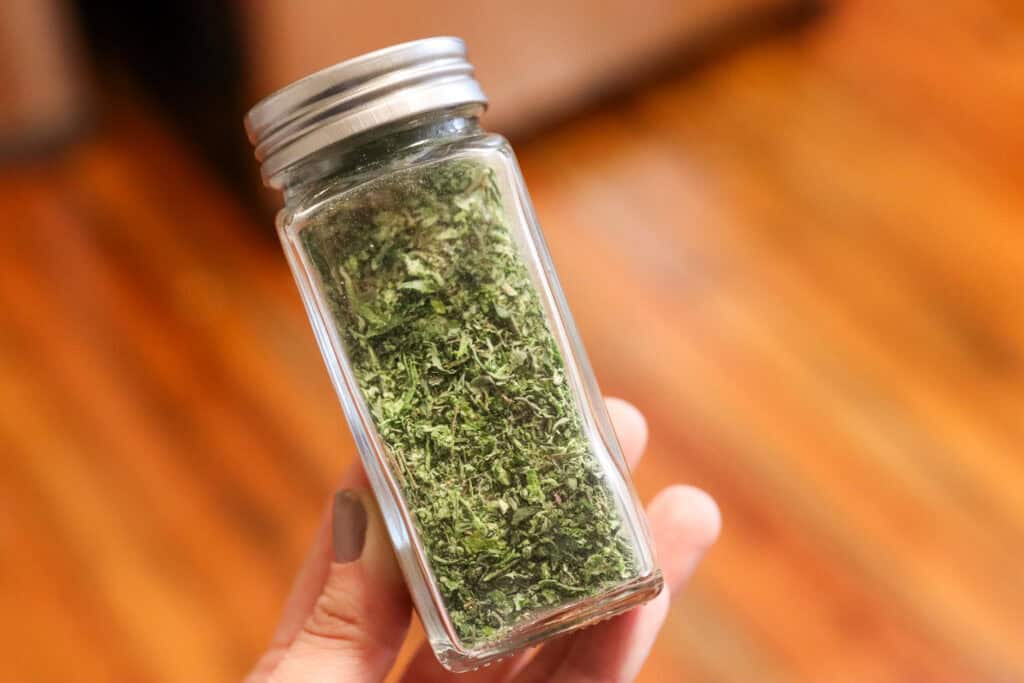
As a small space vegetable gardener, I am always impressed with the amount of herbs I can grow in my container garden.
In fact, I find it challenging to use up all the fresh herbs I’m growing.
And I hate wasting anything I grow in my garden.
If you’re a fellow vegetable gardener, you’ll understand that.
So, over the years I have had to find ways to preserve all those herbs I can’t use when they’re ready for harvest.
Making dried herb blends is one of my favorites!
They’re easy – and I really enjoy being able to get creative with the different variations I create.
Plus, they make great gifts!
Below are the steps I take to make dried herb mixes from my kitchen garden.
Homemade Garden Herb Blends
Below are the steps I take to make my dried garden herbs.
1. Choose and Harvest Your Herbs
I recommend that you pick your herbs early in the morning – this is when they are at their peak.
If harvesting herbs like sage or basil, make sure you snip it just above a leaf set so that the plant will create more branches.
In terms of choosing the herbs, I encourage you to base your selection on your personal preferences.
There is no set recipe for these herb blends, which is what I love about making them.

2. Prepare the Herbs
For the woody herbs like rosemary and oregano, I take the leaves off the stem.
But for herbs with tender stems like parsley and basil, I include the stem. For these herbs, the stems have just as much flavor and nutrients, so why waste them?
At this step, I do a light chop of the larger leaves. We’ll blend them after dehydrating, so there’s no need to chip them finely at this point.
You’ll also want to make sure to remove any leaves that are not usable – sometimes I find insect eggs or webbed cocoons underneath larger leaves.
3. Dehydrate the Herbs
To make my dried herbs, I use a dehydrator for ease and efficiency.
This method provides consistent, low heat to remove moisture without damaging the essential oils that give herbs their flavor. The dehydrator retains more aroma and potency compared to air-drying or oven-drying.
If you do not have a dehydrator, you can air-dry them on a counter.
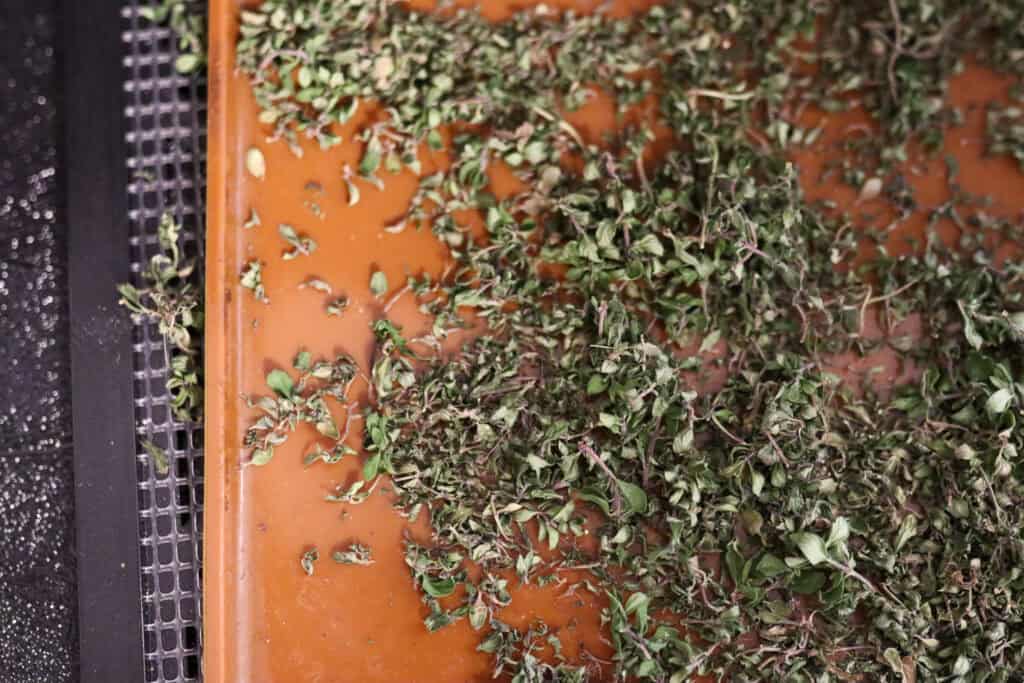
For using a dehydrator, arrange the herbs in a single layer on the dehydrator trays, leaving space for air circulation.
Overlapping can slow the drying process.
The drying times vary for the different herbs from 95–115°F, so when making a blend, I opt for 100°F.
Drying times can vary depending on the herb, humidity, and your dehydrator’s efficiency. Common drying times include:
- Basil, mint: 6–12 hours
- Thyme, oregano, rosemary: 4–6 hours
- Parsley, cilantro: 4–8 hours
The herbs are ready when they crumble easily between your fingers.
If they feel leathery or bend without breaking, give them more time.
I tend to check on them every few hours, and if one tray is ready before another, I’ll pull it out.
Occasionally, I like to dehydrate garlic, citrus zest, and onions to add to these herb blends as well. Like I said, you can customize these blends as much as you want!

4. Blend the Dried Herbs
You could certainly use a mortar and pestle to process the herbs by hand.
I opt for using a food processor or blender, pulsing to get the herbs to the consistency I want.
5. Store the Dried Herb Blends
Store them in airtight containers, like glass jars, in a cool, dark place.
Properly stored herbs retain their flavor for 6–12 months.
Common Herb Blends
If you want to try the more common herb blends, you can use the recipes below.
Italian Seasoning
2 tablespoons dried basil
2 tablespoons dried oregano
1 tablespoon dried thyme
1 tablespoon dried rosemary
1 teaspoon dried sage
Herbes de Provence
2 tablespoons dried thyme
1 tablespoon dried rosemary
1 tablespoon dried oregano
1 teaspoon dried tarragon
1 teaspoon dried lavender (optional for authenticity)
Zesty Lemon Herb Rub
2 tablespoons dried parsley
1 tablespoon dried dill
1 tablespoon dried thyme
1 teaspoon dried lemon zest
Small Space Herb Gardening
As someone with limited gardening space, I focus on versatile herbs like parsley, thyme, and basil, which work well in many dishes.
If you’re a beginning gardener, I believe that starting with an herb garden is a great option.
Herbs are relatively low-maintenance and they can be overwintered even in colder climates.
And they can be used in most dishes, so you’ll get great use out of your small space garden.

