How to Keep Squirrels Out of Vegetable Gardens
Why Squirrels Keep Targeting Vegetable Gardens
Before becoming a vegetable gardener, I thought squirrels were kinda cute.
As I write this, I can tell you without hesitation that they are complete menaces and the bane of my existence.
Ok, that’s maybe a little dramatic, but if you’ve experienced the destruction of squirrels in your garden, you will understand where I’m coming from.
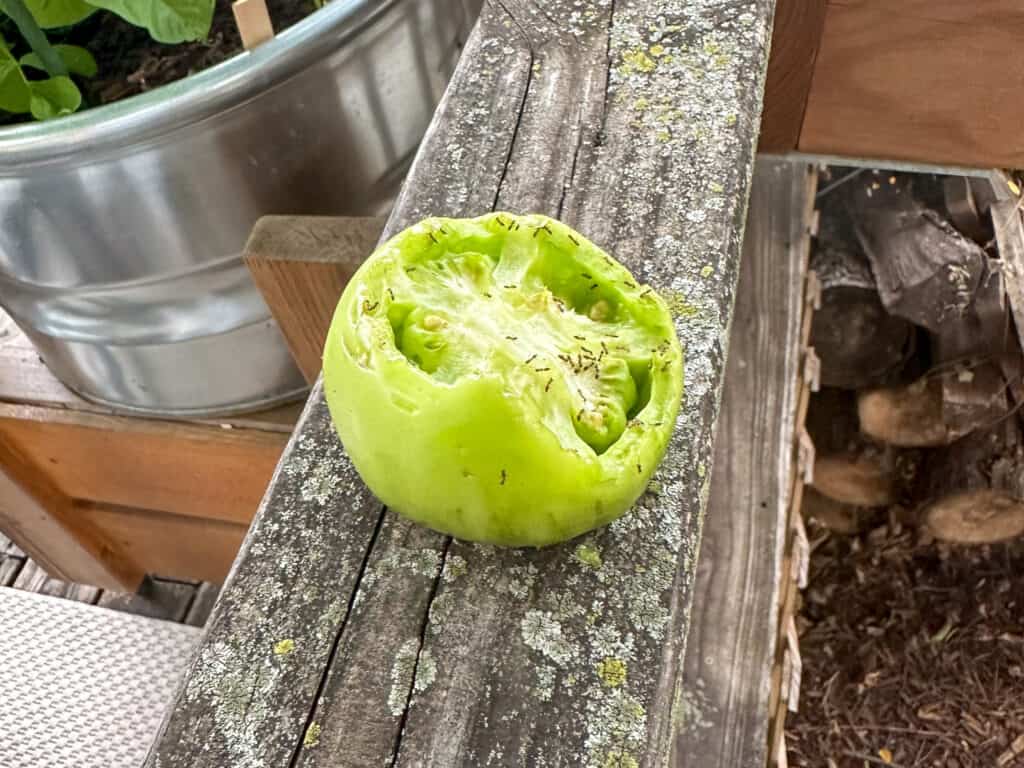
I lost count of how many times I’d go out into my garden only to find seedlings overturned, holes dug where I had just planted seeds, and the proud squeak of the little varmint in the tree above me.
A single squirrel can make a mess fast, and once one figures out your garden is a good place to dig, it may come back again and again.
That is especially frustrating in a small-space garden, where every container matters and every transplant feels like it has to earn its keep.
One curious garden squirrel can wreck a lot in a very short time.
Over the years, I have tried a variety of suggestions to stop the problem.
Some of them sounded good in theory.
Some of them were messy.
Some of them made my garden smell strange.
But the only method that has consistently worked for me is physically covering the bed so they cannot get in. That is the approach I come back to every single season.
For links to the exact products I use, see below.
When Digging Starts, Squirrel Damage Gets Worse
Over the years, I’ve noticed a pattern.
Squirrels are active all year, but the worst damage comes in early spring and again in fall.
They do not hibernate, and in late winter and early spring they often feed on buds, bulbs, and other tender plant material.
Later in the year, they also bury food in loose soil, which is why freshly planted beds and containers are such a magnet.
That pattern matches what I see in my own garden.
In spring, they seem drawn to newly worked soil, cool-season starts, and any container where I have just planted vegetable seed.
In fall, they go right back to using my garden beds for storage, scratching around and tossing soil while they look for the perfect place to bury food.
This is why I pay close attention to timing. The danger is not just that they might nibble a leaf or pick seeds out of the soil. The bigger issue is the digging itself.
Those holes can uproot young plants, expose roots, dislodge transplants, and ruin rows where you direct seed.
If you have ever dealt with digging squirrels, you know they do not need much time to cause a lot of damage.
And while the headline problem may be squirrels, the same setup can also protect young crops from other backyard animals that poke, scratch, or peck at newly planted soil.

Why Physical Barriers Work Better Than Sprays
This is my main message to you: the most dependable way to keep a squirrel out of the garden is to block access.
That may not sound exciting, but it works.
There are several options for physical barriers: netting, fencing, chicken wire, hardware cloth, or framed covers are the most effective and budget-friendly way to protect vegetables from squirrel damage.
Despite what people will claim online, a loose scent, a spicy powder, or a spray might bother a squirrel for a day or two. But if the soil still looks soft and inviting, and if the bed still feels like an easy place to enter, the problem usually comes right back.
That’s why I do not build my strategy around squirrel deterrents. I build it around barriers.
Adjustable Hoop Setup for Container Beds and Raised Beds
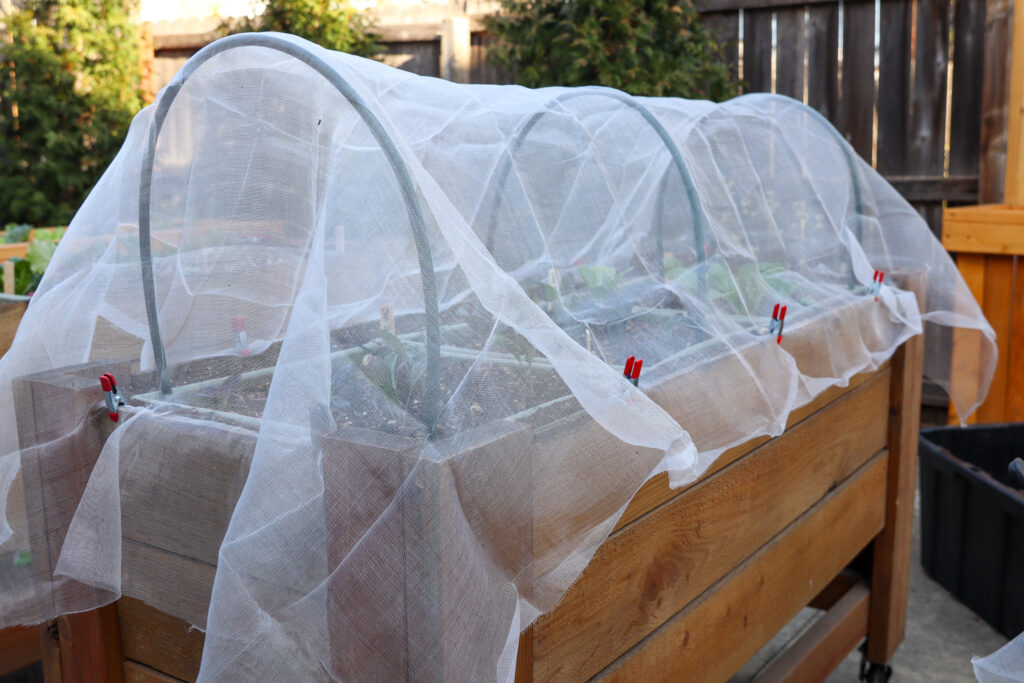
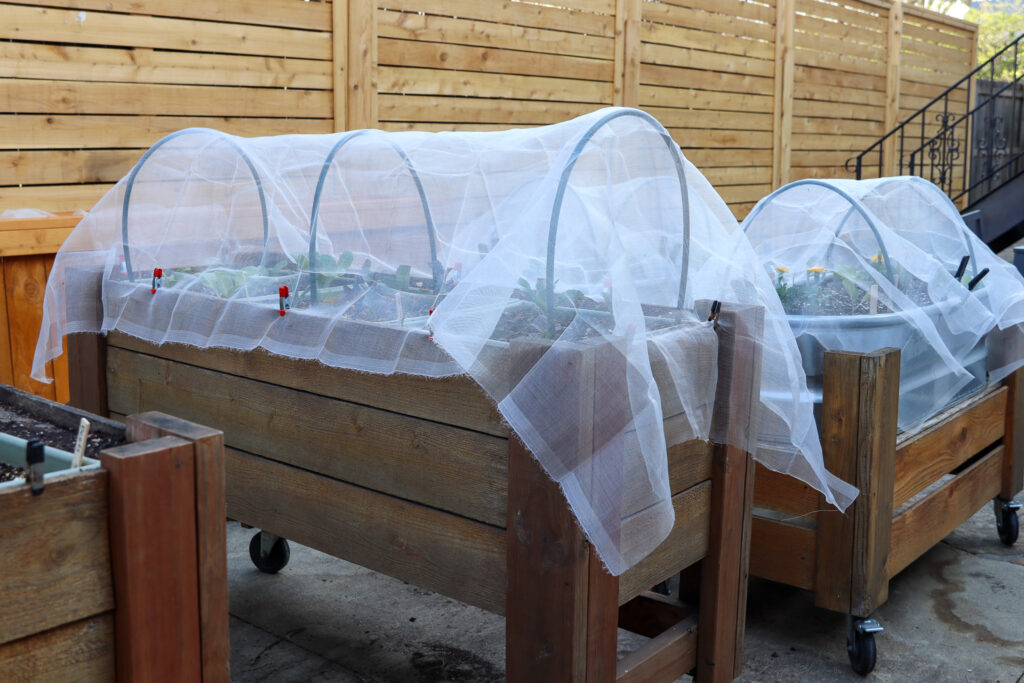
My preferred setup is simple: adjustable hoops over the garden bed with a cover clipped on top.
I use low hoops when plants are small, then raise them as the plants grow.
That gives me flexibility through the season and lets me protect cool-season crops early without having to rebuild the structure every few weeks.
If you are gardening in containers or other above-ground garden beds, this kind of setup is especially practical because it is easy to customize to the exact size of the container.
The big thing is making sure the edges stay secure. If the fabric or mesh gaps open along the sides, a determined squirrel will find the weak spot fast.
I use spring clamps to attach the cover to the sides of the bed and hold everything snugly in place. That matters just as much as the cover itself.
If you grow in larger raised beds, you could do something similar with a frame, cage, or even a simple fence with a top cover, depending on your space. For me, hoops are easier because they are adjustable, lightweight, and simple to remove when I need access.
This is the closest I have come to a truly squirrel proof system, especially during the early spring weeks when the soil is freshly planted and most vulnerable.
Choosing the Right Cover
The best cover depends on the time of year and what you are growing.
In early spring, I often start with frost cloth because it protects from both cold snaps and wildlife.
That gives me two benefits at once. It helps me extend my growing season and keeps anything from getting into the bed to scratch around in the soil.
Once the weather warms, I switch to bird netting or another mesh cover. That keeps airflow moving better while still blocking access.
And this barrier setup has more value than people sometimes realize. It is not only about squirrels.
The same cover can help protect spring greens, brassicas, and other crops from birds, insects, and random backyard interference – hello, cabbage moths!
When I Cover Garden Beds and When I Take the Covers Off
For me, timing matters almost as much as the cover itself.
In spring, I usually protect beds right after planting and keep them covered until about mid-April, sometimes longer if the plants are still small. A squirrel is much less likely to bother a bed once plants are larger and the surface is not newly disturbed.
In fall, I cover beds again once I set out seedlings or direct sow cool-season vegetables.
This timing also helps with the kind of damage that hurts the most in a food garden. I can handle a nibbled leaf now and then.
What I do not want is a bed torn apart right after I seed carrots, lettuce, or beets. That is the kind of setback that costs time.
One reason I like adjustable hoops so much is that I can leave the structure in place while changing the fabric or mesh as the season changes. I am not starting over every time. I am just adapting the same system to match the weather and the size of the plants.
That makes it practical enough that I actually keep doing it.
What About Cayenne, Garlic, and Peppermint Oil?
If you have searched this topic before, you have probably seen all kinds of suggestions. Cayenne pepper. Predator urine. Soap. Strong smells. Essential oils. Homemade sprays. Scare tactics. Random internet tips.
And yes, some gardeners swear by them.
But this is where I think it helps to be honest. These are usually deterrents, not solutions.
Repellents may help in some situations, but they need to be reapplied regularly, especially after rain, and their effectiveness can fade over time.
I have tried the pepper route. It was annoying, temporary, and not nearly as effective as covering the bed.
I have also read advice about garlic and peppermint oil as smell-based options. Those may bother some wildlife for a while, but I do not want my vegetable garden strategy to depend on remembering to reapply something every time the weather changes.
That is really the difference. A spray tries to make the bed less appealing. A cover removes access altogether.
And when the whole issue is squirrels eating or digging in freshly planted soil, removing access is the stronger answer.
How to Fix Damage if Squirrels Already Got In
If the damage is already done, do not panic.
Most of the time, the first step is just cleanup. Refill the holes. Gently firm the soil back around exposed roots. Reset any transplant that got knocked loose.
If a row was disturbed, you may need to replant.
If a plant is too damaged, it may be easier to replace it and move on.
This is where container gardening can actually help. Because the growing area is smaller, you can usually see the exact problem quickly and fix it before it gets worse.
Just know that if a squirrel has identified a container as a good place to dig or start eating, it will return unless you block access.
The Best Way to Keep Squirrels Out of Vegetable Gardens
After years of trying different ideas, my conclusion is pretty simple.
If you want to know how to keep squirrels out of vegetable gardens, the best answer is to cover the bed with adjustable hoops and netting.
It works, I promise.
That is the method I trust in spring when everything is newly planted. It is the method I trust in fall when squirrels start turning up again. And it is the method I recommend most for gardeners growing food in containers, raised beds, and other small spaces.
If you are tired of resetting transplants, smoothing over holes, and wondering what new trick to try next, this is the one I would start with.
Build the hoops. Cover the bed. Secure the edges.
Make access impossible, and the problem usually gets a whole lot smaller.
For links to the exact products I use, see below.
