Do You Need Container Garden Mulch?

Should you mulch your container vegetable garden?
It seems like just one more garden task on top of all of the other ones that you already have.
So, is it really necessary?
I’m going to tell you what I found after eight years of being a container vegetable gardener.
The short answer: yes, you do need to add container garden mulch.
I’m sharing all the reasons why you should absolutely be using mulch in your vegetable container garden. And I’ll tell you what I prefer to use for organic mulch.
Why Use Mulch in a Container Garden?
There are several reasons to add mulch to your container garden!
Moisture Retention
Container gardens dry out more quickly than in-ground beds.
Adding that top layer of mulch helps retain the moisture in your soil, which is especially crucial during those hot summer months when your tomatoes, peppers, and other warm season plants constantly need water.
If you find your garden needing frequent waterings because they’re not retaining moisture, mulch might be the solution.
This is especially true if you garden in fabric grow bags, terracotta pots, metal beds, or black plastic containers, all of which can dry out faster in heat, wind, and direct sun.
In a container garden, you’re working with a limited amount of soil, which means there’s less room for error when moisture levels swing too far in either direction.
Mulch helps slow that process down. It won’t eliminate the need to water, especially in the heat of summer, but it can help your containers hold onto moisture longer and stay more consistent between waterings.
Soil Temperatures
Garden mulch helps regulate soil temperatures.
In the spring and fall, when it’s cooler outside, the mulch helps keep your soil warmer by trapping heat from the sun.
During hot summer months, the mulch reduces temperature by providing a protective barrier that keeps the soil cooler than the surrounding air.
This temperature regulation is vital for the health of your plant roots.
And in containers, root protection matters even more. In-ground soil has insulation from the earth around it. Containers do not.
That means your plant roots are much more exposed to temperature swings, especially if the pots are sitting on concrete patios, decks, gravel, or other heat-reflective surfaces. When the soil gets too hot, plants can become stressed, wilt more quickly, and put less energy into growth and production.
Mulch gives your roots one more layer of protection.
Disease Prevention
Another benefit is that mulch helps prevent soil-borne diseases.
When water from rain or hand watering splashes up onto your plants, it can cause soil-borne diseases to impact the plant.
A layer of mulch minimizes the splash and helps protect your plants.
This is one of those benefits people don’t always think about until they’ve dealt with a frustrating plant problem.
If you’ve ever had lower tomato leaves start looking spotted, yellow, or rough for seemingly no reason, soil splash can absolutely be part of the issue.
Mulch creates a buffer between the soil and the leaves, which is especially helpful in storms or when you’re hand watering with more force than intended.
Adding Nutrients
Depending on what type of mulch you get, it can help add nutrients to your planted containers.
If you choose an organic matter – more on that later – every time you water, the nutrients from the mulch will go into your soil and be taken up by the plants.
This is especially important because vegetable plants are heavy feeders.
This is one of the reasons I strongly prefer organic mulch in vegetable gardening over decorative landscaping mulch.
In a vegetable container, I want every material I add to serve a purpose. I want it to contribute to the overall health of the soil.
Organic mulch breaks down over time, and that means it becomes part of your soil system instead of just covering it.
Aesthetic Appeal
I know some people don’t care what their garden looks like, but for me, my garden is part of my outdoor living space.
So, it’s important to me that my each gardening container looks nice.
Adding a mulch – well, depending on the type – can accomplish that.
I also think mulch makes a container look more finished.
Bare potting mix can start to look dry, crusty, or uneven pretty quickly, especially after repeated watering. A good layer of mulch gives containers a cleaner, more intentional look.
And if your garden is on a patio, porch, balcony, or somewhere guests regularly see it, that visual difference matters.
Weed Suppression
Even though containers usually have fewer weed issues than in-ground gardens, they are not completely weed-free. Weed seeds can still blow in, land in your pots, and sprout.
Mulch helps block sunlight from reaching those seeds, which makes it harder for them to germinate.
In our first home where I started vegetable gardening, we had a tree that each spring would send down seed pods. They would land in my containers and start sprouting. I quickly learned that if I mulched right after they fell from the tree, I’d be able to keep them from sprouting.
Less weeding is always a win, especially in the middle of summer when garden maintenance already feels nonstop.
Less Soil Erosion and Soil Disturbance
Another practical benefit is that mulch helps protect the surface of your potting mix from being disturbed.
Without mulch, repeated watering can shift the soil around, create low spots in the container, or expose shallow roots near the surface.
I was definitely guilty of creating this problem in my early years – especially before I invested in proper gardening hoses.
A mulch layer softens the impact of watering. It helps keep your soil where it belongs and can also reduce that hard, dry crust that sometimes forms on top of container soil over time.
When to Add Mulch to Container Gardens
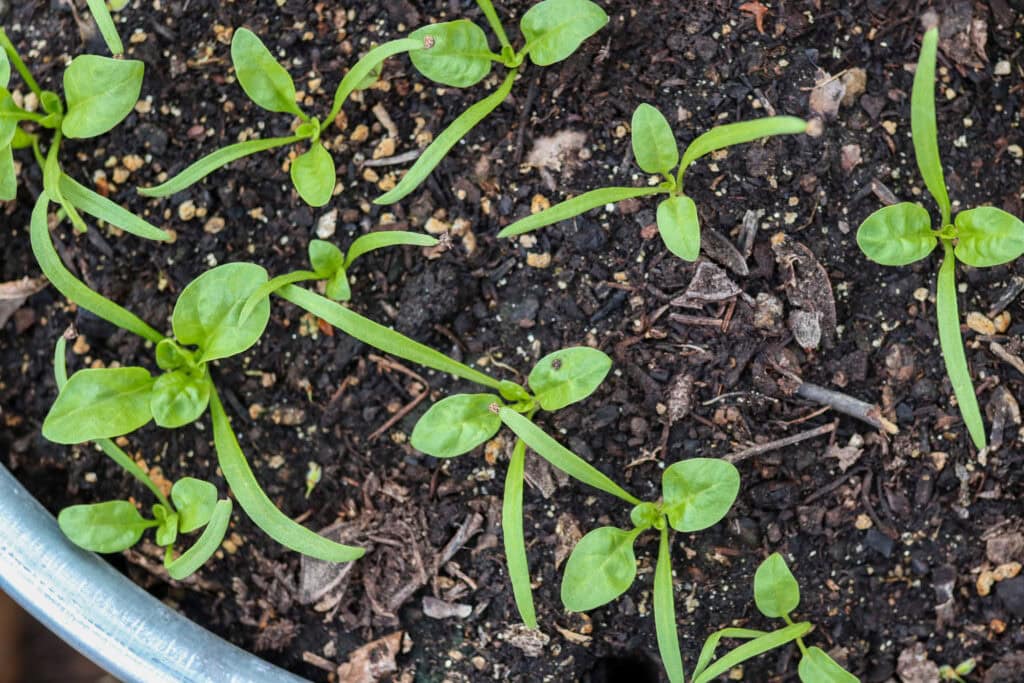
I add mulch to my containers once I plant my transplants or after my seeds have sprouted.
I don’t recommend putting mulch on newly planted seeds, as it might hinder their ability to germinate. I always wait until there are seedlings.
I continue to add mulch throughout the growing season as needed, usually every two to three weeks depending on the season and watering frequency. You’ll notice your soil level going down over time, and topping off the mulch can help with that.
I’ve found that this matters most later in the season, when the original mulch layer has started to break down or thin out.
Early in spring, you may not notice much of a difference. But once the weather turns hot and you’re watering constantly, that missing mulch becomes much more obvious.
If your containers start drying out faster than usual, it’s worth checking whether your mulch layer has worn down.
How to Apply Mulch to Container Gardens
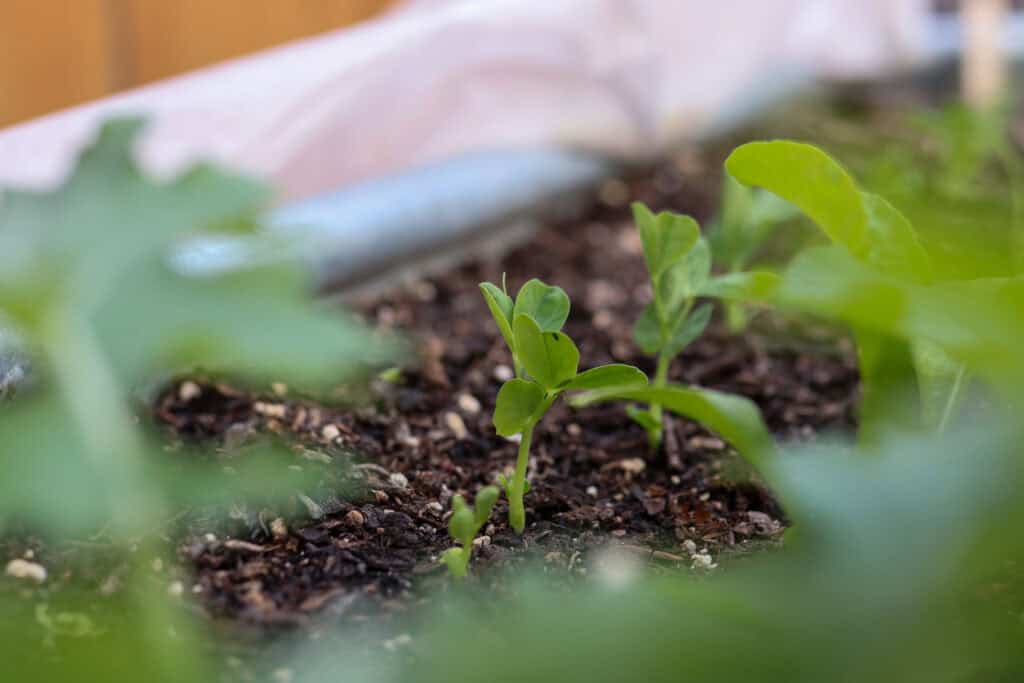
Generally, I apply about one to two inches of mulch as a top layer.
Some advise against placing mulch directly around the stems of your plants. Personally, I haven’t encountered any issues with doing so, but you can avoid direct contact with the stems if you’re concerned.
The main thing is not to overdo it.
In containers, more is not always better. A reasonable layer helps with moisture and temperature regulation, but piling it on too thick can make the soil surface stay too damp, especially during cooler or rainy stretches.
I like about two inches of mulch to cover the soil well without smothering it.
What Type of Mulch to Use in Containers
I’ll start by telling you what not to use.
Avoid using dyed landscaping mulch commonly found in garden centers.
The chemicals used in these dyed mulches can leach into your soil each time you water, which isn’t good for your vegetable plants.
Instead, you’ll want to opt for organic materials.
Organic Mulch Options
There are several organic alternatives you can consider:
- Dry Shredded Leaves: Collect and shred leaves from the previous season to reuse as mulch.
- Grass Clippings: Use untreated grass clippings, but note they might not be as aesthetically pleasing.
- Straw and Pine Needles: These work well in adding a natural look to your containers.
- Wood Chips: If you use wood chips, ensure they are finely ground rather than large bark pieces.
I personally have been using cotton burr compost for many years now – I have found it to be the best container garden mulch.
There are multiple reasons I prefer it:
- Nutrient-Rich: It contains micro and macro nutrients, including protein and carbon, which are essential for plant growth. Watering the compost adds these nutrients to the soil, which is taken up by the plants.
- Aesthetically Pleasing: It looks like a traditional mulch, so it enhances the look of my container beds, which is important given that they’re in my outdoor living space.
- Ease of Use: It spreads easily, doesn’t emit a strong odor, and has been a consistent success in my garden.
Whatever type of mulch you decide to use, remember the key is to choose something made from organic materials.
If you’ve been skipping mulch in your containers because it seemed optional, I’d really encourage you to reconsider it.
In my experience, it is one of those small things that makes a noticeable difference over the course of a growing season.
Your containers look better, your soil performs better, and your plants have a more consistent growing environment.
That’s a pretty good return for a thin layer of material on top of your pots.
I hope you find this information helpful and that you give mulching your container garden a try!
