4 Reasons You Shouldn’t Start a Small Space Vegetable Garden
You likely have reasons for why you want to start a small space vegetable garden, but have you considered why you shouldn’t?
Becoming an urban vegetable gardener has been one of the highlights of my adulthood, but I have talked with many aspiring gardeners who have been bamboozled by influencers making grand claims about only the positives of growing vegetables.
So, in full transparency – and with some lightheartedness – I wanted to share with you reasons to not start a vegetable garden.
Now, I have no regrets about my foray into small space vegetable gardening, so know that these truths have not stopped me from fully enjoying this part of my life.
These are just considerations to keep in mind when deciding whether you want to start on your veggie gardening ventures.
Why You Shouldn’t Start a Small Space Vegetable Garden
I’m here to break those common misconceptions about veggie gardening.
Don’t start a small space vegetable garden to save money
As a beginning vegetable gardener, I was thrilled at the thought of growing my own food and saving money. I mean, if I was growing all these vegetables in my backyard, I wouldn’t have to buy so many at the store, right?
Well, yes – but what I didn’t realize is that there are many costs to having a thriving veggie garden.
It’s not as simple as purchasing seeds and planting them in the ground.
Now, there are many different approaches to vegetable gardening, so other experienced gardeners might tell you that they do, in fact, save money.
It is true that you could grow all your plants from seed, which is cheaper than purchasing starters, and make all your own compost and solutions for pests and fungus.
You could upcycle items in your home to use for container gardening.
All of this can be done – but it takes quite a bit of time, effort, and space – something you likely don’t have if you’re considering a small space kitchen garden.
And if you’re like me and vegetable gardening is something you want to do part-time, it may not be realistic to do all these things yourself.
Rather than be completely self-sufficient, you may find that you need to purchase compost and fertilizers, and maybe you want all your containers to be consistent to keep with a particular outdoor space aesthetic.
In my experience, many of the costs were an upfront investment – the containers and soil to fill them were pricey, as well as the drip irrigation I installed early on.
Of course, these are initial costs, but each year, you will still need to amend the soil, purchase starters, replace gardening tools, and source solutions for various pests and fungi.
So, if you’re looking to save money, this may not be the path for you.

Don’t start a small space vegetable garden to rid yourself of trips to the grocery store
The title “Small Space Garden” means exactly that.
While I certainly appreciate the ability to cut a few sprigs of rosemary for a dish rather than having to purchase a plastic container of it from the store, the idea that a small kitchen garden will replace your grocery list is just not realistic.
Even for our family of two, we are unable to grow enough food in our urban vegetable garden to provide all the vegetables we need.
And in a small space garden, it will be difficult to grow some vegetable varieties, so unless you want to completely stop eating certain vegetables – which we personally would find difficult – you will still need to make the trip to the store.
An alternative if you want all homegrown food could be to grow as much of your own vegetables as you can and then supplement the rest with produce from your local farmers market.
We fully support that!
Don’t start a small space vegetable garden as a passive hobby
While it is true that vegetable plants ultimately are meant to grow and produce, it is not as easy as planting a starter and leaving it be until it’s time to harvest – especially if you want to grow organic vegetables.
I can’t tell you how many hours I have spent brushing aphids off stems of my plants, adding nutrients to my soil, and researching how to get rid of powdery mildew.
An effective vegetable garden will check on their garden daily. Of course, this can be a morning stroll around your garden with coffee in hand.
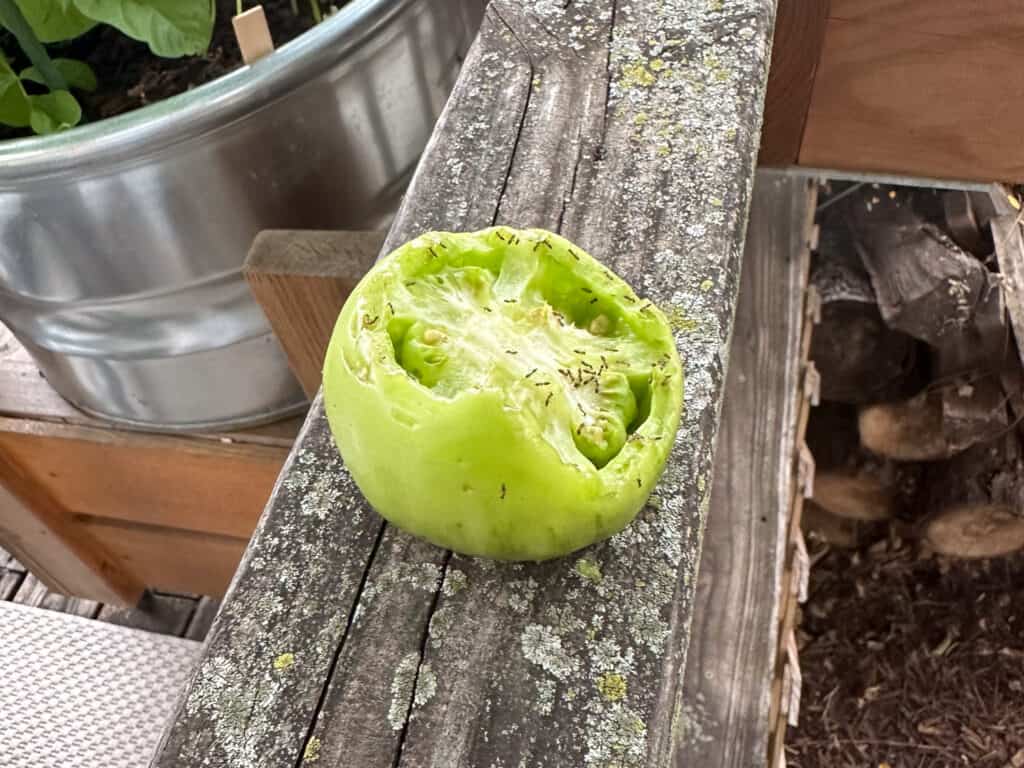
While it is entirely possible to manage a vegetable garden part-time, if you ignore it too long, you will need to put even more time into managing the various pests (see the squirrel bite out of th tomato below) and overgrowth.
So, while vegetable gardening is rewarding, it is not passive.
Don’t start a small space vegetable garden if you’re impatient
This took me more than one growing season to learn.
Those tomatoes you planted in June?
You won’t be enjoying them until the end of July – if everything goes as planned, that is.
Having a kitchen garden has taught me patience.
Most vegetable plants take time, but when they’re finally ready for harvest, you’re reminded of why you make the effort,
Is Small Space Vegetable Gardening Worth it?
Despite all of these misconceptions about vegetable gardening, there are more benefits than downsides.
There is nothing like plucking that perfectly ripe tomato off the vine and finding that it is the best tasting tomato you have ever eaten.
I find it rewarding to come home at the end of a long workday to find that more seedlings have risen through the soil or a flower has opened, ready to be pollinated.
For me, having a kitchen vegetable garden is about much more than the vegetables.
I have learned to appreciate and respect nature in a way I never could before.
I have found patience and learned to appreciate the passing of time.
And when I am making a recipe and realize with just a few minutes left before serving it that I need a few sprigs of thyme, there is nothing as rewarding as being able to walk to my back deck and pluck them out of my container garden.
So yes, starting a small space vegetable garden is more than worth it.