How I Overwinter My Container Herb Garden
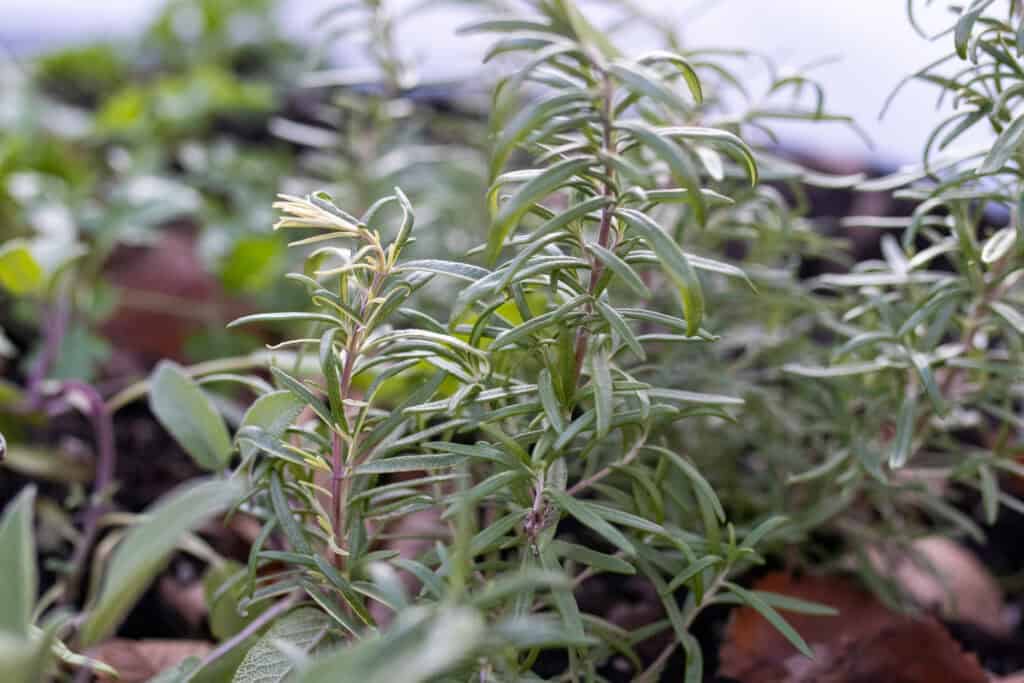
As the days get shorter and the weather turns cooler, I face the reality of the growing season coming to a close.
This is the fate of gardeners living in a climate that experiences winter, like I do here in the Midwest.
But what if the growing season doesn’t have to completely end? What if amongst those dreary days, I can find just a glimmer of joy in my urban garden?
Even those who aren’t gardeners know that many vegetables cannot survive winter. My tomato plants, cucumbers, snap peas – those have all been harvested and pulled by now.
So, what remains?
Herbs!
As I write this in mid-November, I have several plants still thriving in my container herb garden.
And as I do each year, I will be overwintering these hardy herbs to use throughout the cold season.
I truly love being able to walk outside of my kitchen in the winter and clip sprigs of fresh herbs to use in my soups, stews, and other comforting warm dishes.
Doesn’t that sound lovely?
If you’ve never overwintered herbs outdoors, below is what I have learned after many years of doing it myself.
Which herbs are best to overwinter?
First, you need to understand which herbs you can and cannot overwinter outdoors. You need to understand that not all herbs are great for this.
Herbs can be classified by their hardiness – that is, which ones can survive cold spells and which ones are more tender and will struggle in the lower temperatures.
I’ll make it easy for you by classifying them in the below chart.
| Hardy Herbs | Tender Herbs |
|---|---|
| thyme, rosemary, sage, chives, mint, oregano | basil, cilantro, parsley, dill |
This is really the most important piece to successfully overwintering herbs – you must choose the plants that will be able to survive freezing temperatures.
Even the hardiest of herbs will need help, though – we’ll get to that later on!
How I keep my herb garden over the winter
I want to preface this by telling you that my herbs are in container gardens. I find it easier to overwinter in containers.
Below are the steps I take to ensure my herbs survive into the winter.
- Mulch Heavily: To help protect the plant roots from frost, I add a thick layer of mulch as the temperatures start to drop. Personally, I like cotton burr compost, but other options include straw (not hay – never use hay), leaves, or another type of organic matter.
- Water Sparingly: Once the temperatures are consistently dropping below freezing each day, I limit the amount of water I give my plants. When plants are not growing much – and they don’t in the winter – their water needs are low. When I water them, I make sure it’s when the temperature is above freezing and will stay there for at least several hours. I only water once every few weeks.
- Cover Herbs During Freezes: During my first couple years of gardening, I tested the resilience of my vegetable plants. While some could survive in extreme conditions, I quickly learned that it was not worth it to me to see what would happen. So, I am consistent about covering my overwintered herb garden to keep frost off my plants. More below on how I do that!
Protecting my overwintered herb garden
In my experience, the key to successfully overwintering herbs outdoors is to cover them with a frost protector.
While you can certainly use fabric you have around your home, I recommend purchasing frost cloth meant for covering plants. These covers ensure that sunlight will be able to get through, which is important.
Frost covers come in various amounts of thickness. I purchase 1.1 ounce per square yard for my overwintering, and I tend to cover my container herb garden in several layers of it.
In addition to the covers, I utilize hoops to create a kind of greenhouse effect. If you lay the frost covers directly on the plants, they may still be impacted by the layer of frost or snow on the fabric.
Another important part of this process is ensuring that the container is fully protected from the outside elements, so you’ll need to avoid any gaps where the cold air can get inside.
This is why I like overwintering in containers – I can use clamps to affix the cover to my container, ensuring that the fabric is covering the entire container and will not move in the wind.
By taking these precautions, I am able to keep my herb garden throughout most of the winter – there have been some years where an herb plant or two still struggled in the coldest weeks of the year, but that is much better than not having any type of fresh herbs at all.
Harvesting fresh herbs all winter long makes me happy
And that’s the truth of it.
While it’s great to be able to snip herbs for my winter dishes, what I truly love about overwintering herbs is the happiness I feel being able to grow plants in the gloomiest months of the year.
If you’ve never tried overwintering herbs, this is your year – I encourage you to make it happen!
