Organic Garden Soil vs. Potting Mix: What’s the Difference?

If you’ve ever stood in the garden center staring at bags labeled garden soil, potting mix, raised bed mix, and topsoil, you are not alone.
It all sounds similar enough that it feels like you should be able to grab whichever bag is on sale and move on.
But this is actually one of those decisions that can make a big difference in how well your vegetable garden grows.
Because even though these products may look similar in the bag, they are not interchangeable.
And if you’re gardening in containers, grow bags, raised beds, or other small spaces, using the wrong one can cause problems with drainage, watering, and root growth fast.
Gardening Soil vs. Potting Mix
Potting mix is for containers.
Garden soil is for in-ground gardens and many raised beds.
That’s the main difference.
It comes down less to marketing words on the bag and more to how the material functions around plant roots.
Roots need water, yes. But they also need oxygen. And the growing medium you choose has a big impact on whether those roots stay healthy or end up sitting in something too dense and compacted.
The easiest way to think about it is this: potting mix is meant for containers, while garden soil is intended for in-ground growing spaces and beds.
What Is Organic Gardening Soil?
Organic gardening soil is usually a soil-based product designed for use in garden beds.
That means it is generally intended for:
- in-ground vegetable gardens
- raised beds that function more like real soil systems
- areas where the roots have more depth and room to spread
It may contain things like compost, forest products, aged bark, and mineral soil. If it’s labeled organic, that usually means the ingredients or nutrient sources meet that manufacturer’s organic standards.
But here’s the important part:
Organic does not automatically mean it’s right for containers.
That’s where a lot of gardeners get tripped up.
The word organic describes what’s in it. It does not tell you whether the product is physically designed for a pot or container.
And in container gardening, the physical structure matters a lot.
In other words, even if a bag sounds natural, it still may not be the more suitable soil type for container vegetables.
What Is Potting Mix?
Potting mix is made for containers.
Unlike garden soil, potting mix is usually a soilless or mostly soilless growing medium. It’s often made from ingredients like:
- peat moss or coco coir
- perlite
- vermiculite
- composted bark
- compost (sometimes you add this separately)
The purpose of potting mix is to create a medium that can hold enough moisture for the plant while still allowing air to move through it.
That balance is especially important in containers because pots are a much more controlled and limited environment than the ground.
When you’re growing vegetables in a container, the roots only have that one small space to live in. So, if the mix gets too dense, too wet, or too compacted, the plant feels it quickly.
This is also why potting mix is formulated differently than garden soil. It is built to stay lighter, airier, and better drained for container growing.
Is Potting Soil the Same as Potting Mix?
This is a really common question, especially because stores (and, to be honest, I do this) often use the terms potting soil and potting mix almost interchangeably.
But technically, they are not always the exact same thing.
In many cases, what is sold as potting soil is still a lightweight container product made from materials like peat moss or coco coir, perlite, composted bark, and other soilless ingredients. So in everyday gardening language, people often say potting soil when they really mean potting mix.
That said potting mix is usually the more accurate term because most container products do not actually contain real mineral soil.
And that distinction matters.
A true potting mix is designed to:
- hold moisture
- drain well
- allow air to move around the roots
- stay light enough for container growing
If a product contains too much actual soil, it can become too heavy and compacted for containers. That is why most quality container products are made to function more like a growing medium than true garden soil.
So, is potting soil the same as potting mix?
Sometimes in casual conversation, yes.
But technically, potting mix is the more accurate term for what you should be using in containers, not potting soil.
If you are buying a bag for a container vegetable garden, don’t just go by the name on the front. Turn the bag over and look at what it is actually made of. If it is light, fluffy, and made for containers, that is what you want.
Why This Matters For Container Gardening
This is one of those topics that matters even more when you grow in containers, on patios, on decks, indoor pots, or in grow bags.
In an in-ground garden, the soil is part of a much bigger system. There’s more depth. More mineral soil. More room for drainage and root expansion. More natural buffering.
Containers don’t have any of that.
So if you fill a pot with something too heavy, the roots can struggle fast.
That’s why when it comes to containers, you want lightweight, well-draining potting mix, not garden soil.
This is especially true for plants growing in tight spaces and for vegetables grown in outdoor containers, where the root zone heats up, dries out, and changes quickly.
Why You Shouldn’t Use Garden Soil In Containers
This is probably the most important takeaway in the whole article.
Garden soil is usually too dense for containers.
Even if it looks rich and healthy in the bag, it can compact too much in a pot. When that happens:
- drainage slows down
- oxygen around the roots decreases
- roots struggle to grow well
- plants become more vulnerable to stress and disease
- the container gets heavy and harder to manage
And if you’ve ever had a container that stayed soggy way too long or plants that just seemed stunted for no obvious reason, this can absolutely be part of the problem.
In-ground soil works in the ground because it’s part of a larger soil structure. But once you place that same heavier material into a container, it behaves differently.
That’s why potting mix exists.
It may look like regular dirt at first glance, but it does not behave the same way once it is inside a pot.
Why Potting Mix Works Better In Containers
Potting mix is designed to stay lighter and more open.
That gives container-grown vegetables a better balance of:
- moisture retention
- drainage
- airflow
- root space
This is especially important for vegetables like tomatoes, peppers, cucumbers, and eggplant, which need healthy root systems to support strong growth and production.
And in small-space gardening, healthy roots are a big deal. When your growing space is limited, your soil mix has to work harder.
You don’t have extra room to make up for a poor root environment.
Potting mix also should not be treated as a stand alone source of nutrition. It creates the right structure for roots, but you will still need to feed your vegetables through the season, especially in containers where nutrients wash out more quickly.
So, When Should You Use Organic Garden Soil?
Organic gardening soil is usually the better choice for:
In-Ground Vegetable Gardens
If you’re planting directly in the ground, garden soil products and compost-based amendments make much more sense than potting mix.
Raised Beds That Act More Like Garden Beds
If your raised bed is open to the ground underneath and functions more like an in-ground growing space, a more soil-based mix is often the better fit.
Improving Existing Soil
If you’re building soil structure or adding organic matter to a garden bed, a garden soil product may be useful depending on what you’re starting with.
That said many recommendations still emphasize improving native soil with compost rather than simply replacing it with bagged products.
This kind of product may also be sold as a garden mix or blended bed soil depending on the brand.
When Should You Use Potting Mix?
Potting mix is the right choice for:
Containers
- patio pots
- grow bags
- buckets
- window boxes
- planters
- hanging baskets
Seed Starting and Transplanting
Young seedlings need a light, airy growing medium so roots can develop well early on.
Small-Space Vegetable Gardens
If your whole garden is happening on a deck, balcony, porch, driveway, or tiny backyard, potting mix is usually what you want for your containers.
What About Raised Beds?
This is where gardeners get confused, because raised beds can fall somewhere in the middle.
Not all raised beds are the same.
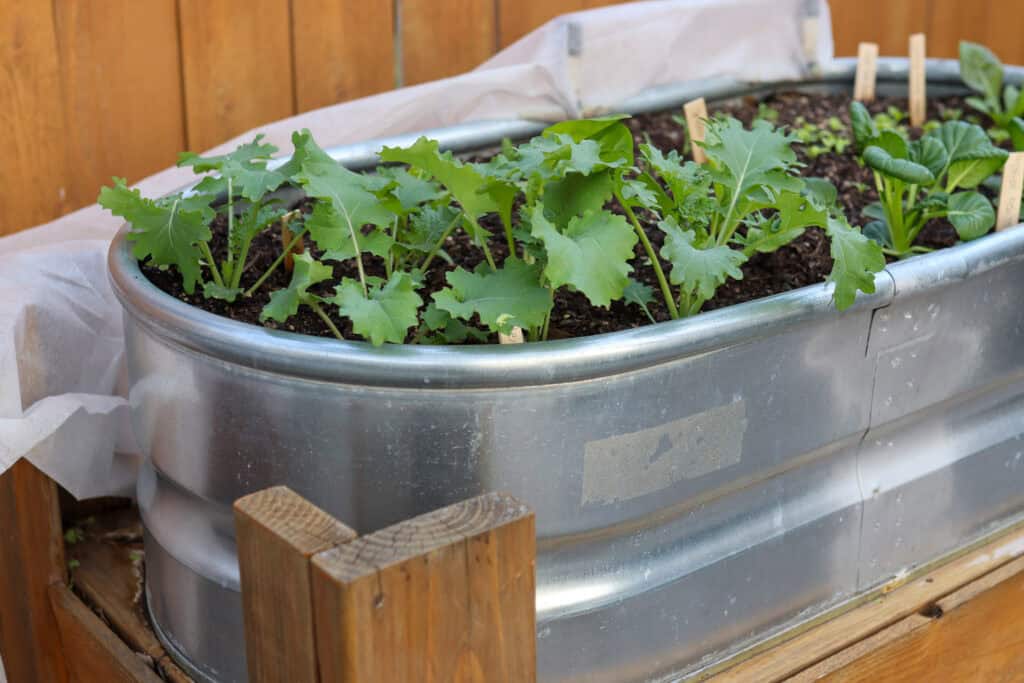
A shallow raised bed that is open to the ground and filled with a more soil-based blend is different from a tall raised planter box that behaves more like a giant container.
That’s why the best material depends on how the raised bed functions.
A few general guidelines:
- If it behaves like a garden bed, use a soil-based raised bed or garden blend with compost.
- If it behaves like a container, use a lighter mix with better aeration and drainage.
This is also why a bag labeled “raised bed mix” may be more appropriate than either standard garden soil or standard potting mix, depending on the setup.
If you are building more of a traditional soil garden or raised bed connected to the ground, that heavier mix usually makes more sense than a fluffy container blend.
What Happens If You Use The Wrong One?
Here’s what that can look like in real life.
If you use garden soil in a container:
- it may compact too much
- water may drain too slowly
- roots may not get enough oxygen
- plants may stay smaller or less productive
If you use only potting mix in a large raised bed:
- it may dry out faster than you want
- watering may become more frequent
- the bed may not have the long-term stability of a more soil-based blend
It doesn’t mean the plants will instantly fail. It just means the setup may be harder to manage and less ideal over time.
That is one reason bagged products marketed for vegetable beds, raised beds, or even landscaping are not always the right choice for containers. Some soil products sold for landscaping use are built for filling beds and improving ground areas, not for confined root systems in pots.
Final Thoughts
If you remember nothing else, remember this:
Potting mix is for containers.
Organic gardening soil is for in-ground gardens and many raised beds.
They are not the same thing, and they are not meant to do the same job.
In small-space vegetable gardening, this matters more than a lot of people realize. The right soil for container gardens helps support healthy roots, better drainage, and more consistent growth. The wrong one can make your garden harder to manage from the start.
So before you buy the bag that sounds the most natural, make sure you’re buying the one that actually fits where you’re growing.
Because in gardening, the roots are where everything starts.
