Best Soil for Container Vegetable Gardening

If you’re growing vegetables in containers, the soil you use can make or break your garden.
This is one of those things that sounds simple at first. You fill a pot with soil, plant your carrots or tomatoes, and expect everything to grow from there.
But container gardening does not work the same way as gardening in the ground.
When vegetables grow in a container, they are depending on a limited amount of soil for all their needs. That soil has to hold moisture, drain well, allow air to reach the roots, and provide a healthy environment for growth. And because the space is so limited, problems show up faster.
That is why the best soil for container vegetable gardening is not just any bag of soil from the garden center. It needs to be a mix that is designed to perform well in containers.
Once you understand what container soil needs to do, it gets much easier to choose the right materials and improve your setup over time.
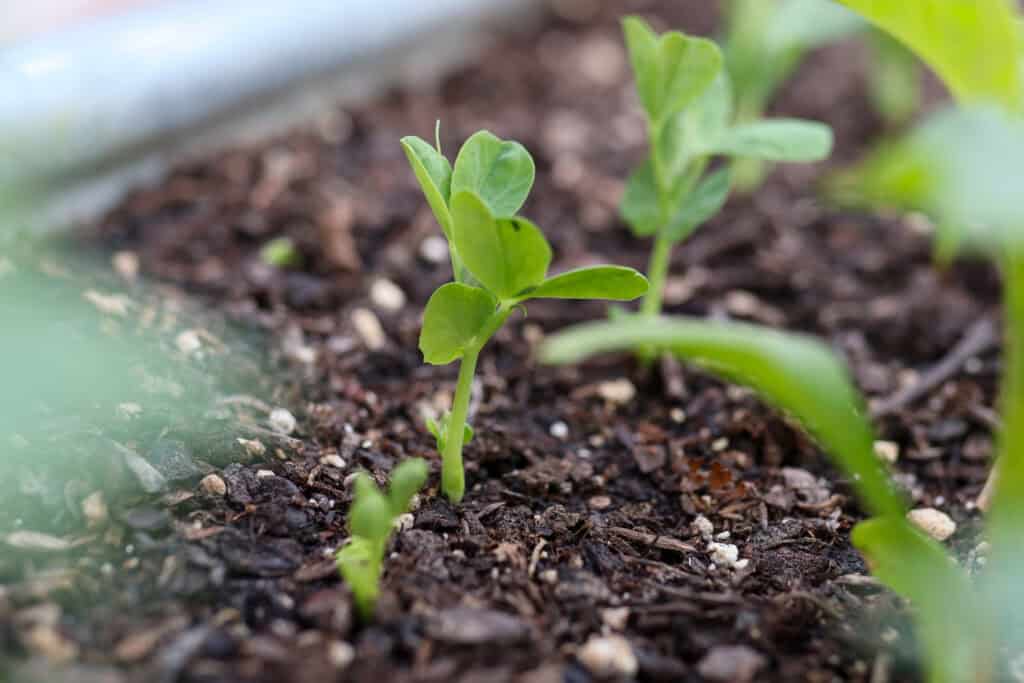
Understanding Container Gardens vs Raised Beds?
First, let’s make sure we understand what exactly you’re growing vegetables in. This is where there can be confusion – even for me at first.
In the simplest way to understand it:
- A raised bed is usually trying to mimic and improve real garden soil.
- A container is trying to create an artificial but ideal root environment inside a limited space.
Containers are generally anything that is not connected to the ground. It’s not just pots, though – for example, I have several larger containers that sit on a wooden platform on wheels.
Raised beds are generally considered anything connected to the ground where the soil in your bed is interacting with the native soil in the ground.
But here’s where it’s a bit nuanced. If you have taller raised beds, like I do (my raised beds are 3′ tall), those can act like containers, especially for vegetable plants because the root zone of those plants is pretty high up from the ground.
At that height, the bed starts acting like a very large container because so much of the root area is elevated and exposed. It’s more of a hybrid situation between a true raised bed and a container garden.
You don’t want to use only garden soil because this mineral soil is heavy, compacts more easily, and in enclosed or semi-enclosed growing spaces can reduce air and water movement around roots.
You also don’t want to use straight potting mix because it can dry out too fast, shrink as it breaks down, and require more frequent watering and fertility management.
So, in this scenario, you want to do a mixture – 20% top soil or garden soil and the remainder a blend of potting mix and compost.
That said, for most standard containers, gardening containers, planters, and bags, you do not want to treat them like raised beds. They need a lighter mix because the root zone is fully enclosed and has much less room for error.
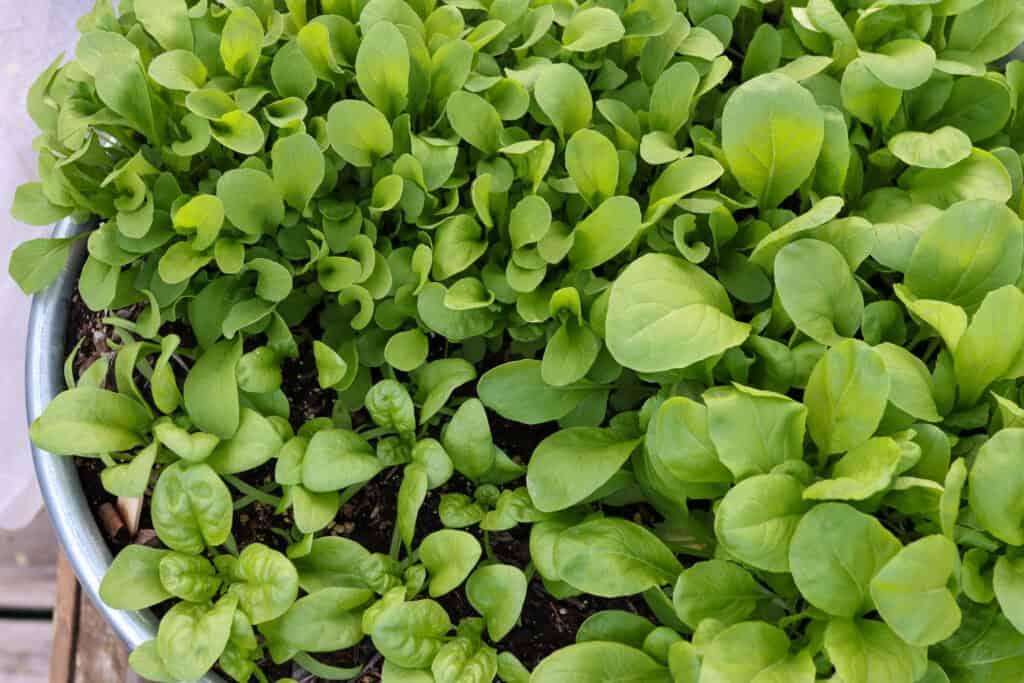
Why Container Vegetables Need a Different Soil Setup
In-ground gardens and container gardens are two very different growing environments.
In the ground, plant roots can spread farther, soil drains more naturally, and the earth helps buffer swings in moisture and temperature.
In a container, roots are confined to a much smaller space. Water moves differently. Soil dries out faster. Nutrients wash out more quickly. And if the mix is too dense or too soggy, roots do not have anywhere else to go.
That is why regular garden soil is usually not the best choice for containers.
Even really good garden soil tends to become too compact in a container. It can hold too much water, reduce airflow around the roots, and make it harder for vegetables to grow well.
Container vegetables need a soil mix that stays lighter and looser than in-ground soil. It needs to support healthy roots while also managing water in a much more controlled space.
If you want a full breakdown of that difference, read Garden Soil vs Potting Mix.

What the Best Container Soil Needs to Do
The best soil for container vegetable gardening is not about one single ingredient. It is about how the mix performs.
A good container mix needs to do four things well:
1. Hold moisture without staying soggy
Vegetables in containers dry out faster than vegetables planted in the ground. Your soil needs to hold enough moisture to keep plants hydrated between waterings. But it also cannot stay wet for too long, especially around the roots.
2. Drain excess water well
Containers need a mix that allows extra water to move through. If water sits too long in the root zone, plants can struggle quickly.
3. Provide air space for roots
Healthy roots need oxygen. That is one of the reasons dense, heavy soil performs so poorly in containers. A good mix needs enough pore space for air to move through the soil.
4. Support steady plant growth
Your soil also needs to hold onto enough nutrients and organic matter to support strong, steady growth over the season.
When your mix does all four of those things well, your vegetables have a much better chance of thriving.
A container vegetable garden also depends on the soil to stay physically stable over time. In other words, it is not enough for the mix to feel fluffy on planting day.
It needs to keep working after repeated watering, summer heat, and weeks of root growth. Some mixes look great at first but then settle down too much, which reduces air space and makes watering harder to manage.
This is one reason beginner gardeners sometimes feel like they are doing everything right but still struggle.
They may water consistently and even fertilize, but if the soil structure collapses or stays wet too long, the roots never really get the environment they need.
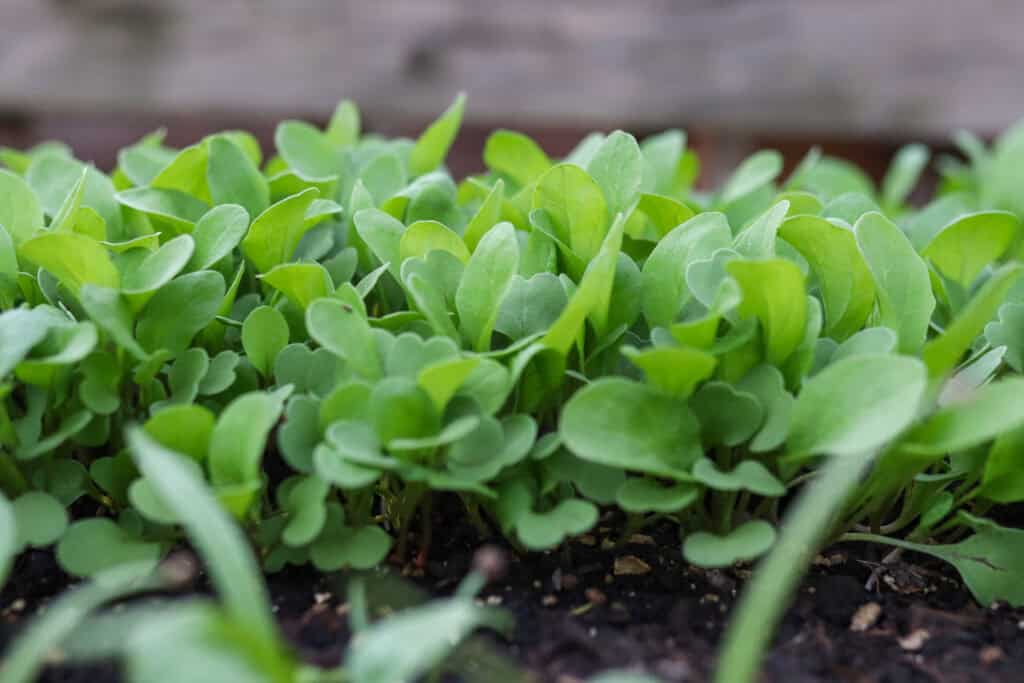
Why Potting Mix Is Usually the Best Starting Point
For most container vegetable gardens, potting mix is the best place to start.
That is because potting mix is designed for container growing. It is made to be lighter than garden soil and better suited for the balance of drainage, aeration, and moisture retention that containers need.
This does not mean every bagged potting mix is perfect on its own. Some are better than others, and some may still benefit from amendments depending on your climate, your watering habits, and what you are growing.
But in general, a quality potting mix gives you a much better foundation than garden soil.
When you are shopping, what you really want is a potting mix designed for containers rather than a heavy bag labeled for in-ground use. A lot of newer gardeners see words like “garden,” “bed,” or “organic” on the label and assume they are all interchangeable, but they are not.
It also helps to know that potting mix and potting soil are often used almost interchangeably in everyday conversation, even though bagged products can vary quite a bit from brand to brand.
One bag of potting soil might be light and airy, while another might break down faster or hold more moisture.
That is why reading ingredients matters.
If a product is mostly peat moss or coco coir with perlite, that can be a good base. Even if contains compost, worm castings, or other organic matter, even better – but you can always add those in manually.
The Main Ingredients in Potting Mix
Once you understand what a good container mix is supposed to do, the ingredients start making more sense.
Each ingredient plays a different role.
Coco Coir or Peat Moss
Coco coir or peat moss helps with moisture retention while still keeping the mix relatively light. It is often used in homemade potting mixes and container blends because it helps create a fluffy, workable texture.
Whether you use coco coir or peat moss is a personal preference.
I prefer coco coir, which is made of coconut husks, because it is not acidic like peat moss so you don’t have to add in a lime to the mixture.
But if you’re buying a pre-made mix instead of making your own, that doesn’t matter.
You can read more in What Is Coco Coir for Gardening? and Coco Coir vs Peat Moss for Vegetable Gardening.
Compost
Compost adds organic matter and helps improve moisture retention and nutrient holding.
Vegetable plants need nutrients, and compost is a great way to get them in your garden.
It can be a really helpful ingredient in container gardening, but it works best as part of a balanced mix rather than as the whole thing.
Compost also helps your soil act more like a living system instead of just a filler inside a pot. It supports water retention, helps hold nutrients longer, and improves texture. F
or many crops, that makes a real difference over the course of a growing season.
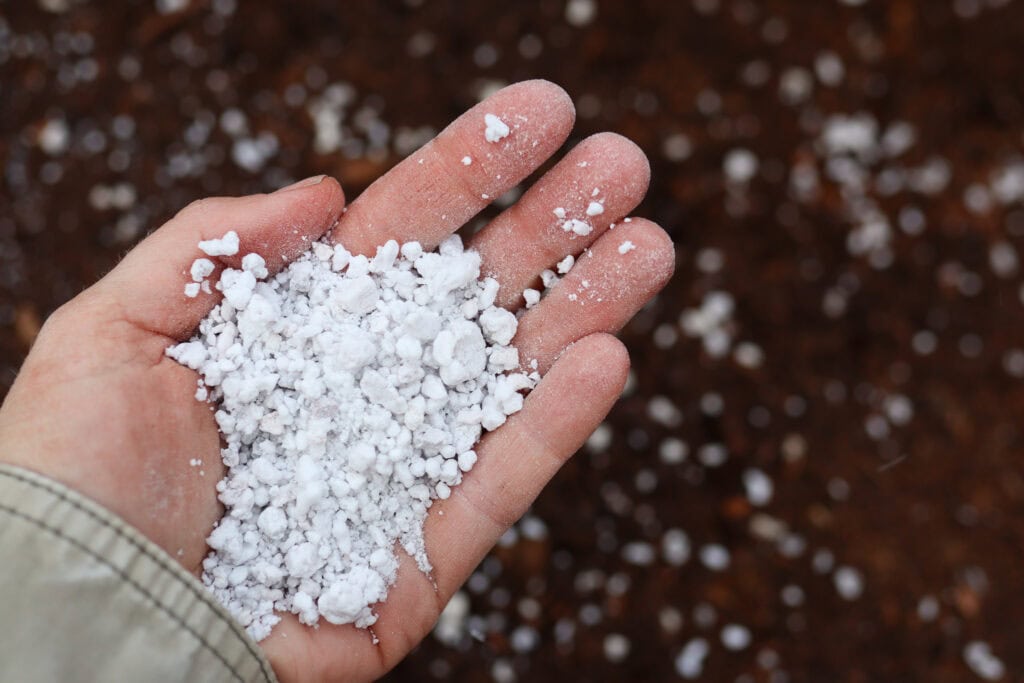
Perlite
Perlite improves drainage and aeration. It creates more air space in the mix and helps prevent soil from feeling too dense or compact.
If you’ve ever bought a potted plant, you’ve seen perlite in the soil mix.
Perlite is especially helpful in potting soil that feels too dense or stays wet for too long after watering. It keeps the mix lighter, which is a big reason so many gardeners use it in homemade blends.

Vermiculite
Vermiculite holds more moisture than perlite and can also help with nutrient retention. It is useful when a mix dries out too quickly and needs to hold water a little longer.
Personally, I do not add vermiculite to my potting mix because all I really need is perlite. If you live in an especially hot, dry climate, you may want to add both.
If you want a full comparison, read Perlite vs Vermiculite for Vegetable Gardening.
This can be especially useful for gardeners in hot climates or for fast-drying containers that sit in full sun all day. Some crops are more forgiving than others, but leafy greens and shallow-rooted plants usually appreciate more even moisture.
Worm Castings
Worm castings add organic matter and a gentle nutrient boost while also supporting a healthier soil environment. They are a great amendment for container vegetables because they help improve the mix without making it heavy.
For more on that, read Worm Castings in the Vegetable Garden.
Worm castings are one of those ingredients that newer gardeners sometimes overlook because they do not seem dramatic.
But they can quietly improve the soil in a way that supports healthier roots and more stable growth, especially in small containers.
How to Help Vegetables Grow Better in Pots
If you want vegetables to grow better in containers, it helps to think beyond just what is in the bag.
A soil mix has a job to do. It needs to support roots, regulate water, and keep enough air in the mix so plants do not sit in a heavy, waterlogged environment.
This is also where size matters.
Small pots dry out faster than larger pots.
Fabric containers often dry out faster than plastic ones.
Shallow containers behave differently than deep ones.
So, even when two gardeners use the same potting soil, their results may not be exactly the same.
The types of crops you are growing matter too.
Fast-growing herbs, lettuce, and radishes may be fine in a lighter mix for a shorter season. Larger fruiting crops like tomatoes, peppers, eggplant, cucumbers, or squash usually need a richer and more supportive blend because they stay in the container longer and demand more from the soil.
This is part of why one-size-fits-all advice can be frustrating.
The goal is not just to find a product labeled for vegetables. The goal is to find or build a mix that matches your container, your climate, and your crops.
Building a Better Container Vegetable Soil Mix
A good container vegetable soil mix usually starts with a light base and then gets adjusted from there.
For example, you might start with a quality potting mix or potting soil, then add compost for organic matter and worm castings for a gentle nutrient boost. If the mix feels too dense, perlite can help open it back up.
Some gardeners wonder whether they should add sand to a container mix. In most cases, sand is not the first thing I would add for vegetable containers. Because it is heavy, it can work against the light, airy structure you are trying to create. In large amounts, it can make the mix denser than you want.
That is one reason container gardening often relies on lighter ingredients and balanced mixtures instead of trying to copy what happens in the ground. Containers behave differently, so the soil has to behave differently too.
If you are using bagged products, it is also okay to make small adjustments rather than starting from scratch.
You do not have to become a soil scientist overnight.
A simple improvement to potting soil can go a long way when you understand what your mix is missing.
How Amendments Improve Container Soil
Not every potting mix you purchase will perform exactly the way you want right out of the bag. For example, when I am not making my own and purchasing a bagged potting mix, the brand I use is peat moss, lime, and perlite. Vegetable plants need more to thrive.
That is where amendments come in.
If you want a practical breakdown of that process, read How to Amend Soil in Container Gardens.
Amendments are what help turn a decent base mix into a better one for food-growing plants. Compost can improve organic matter. Worm castings can add biology and gentle nutrition. Perlite can improve drainage and aeration. Vermiculite can help if the mix dries out too quickly.
The point is not to keep adding random ingredients just because you have seen them recommended online.
The point is to make thoughtful changes based on what the soil actually needs. If your containers stay wet too long, focus on structure and airflow. If they dry out almost immediately, focus on moisture retention. If plants start strong but fade quickly, that may point to fertility and organic matter.
This is especially true with vegetables because they are not just sitting there looking decorative. They are actively producing leaves, roots, flowers, and fruit. That takes energy, and the soil needs to support that process.
You may be feeling overwhelmed by all this information. What I recommend if start off at first with what you think is best based on your containers and climate.
You can always adjust for the next growing season.
I didn’t learn all this in one year – I’ve done trial and error over my eight years of vegetable gardening to get to this point. It’s ok to experiment!
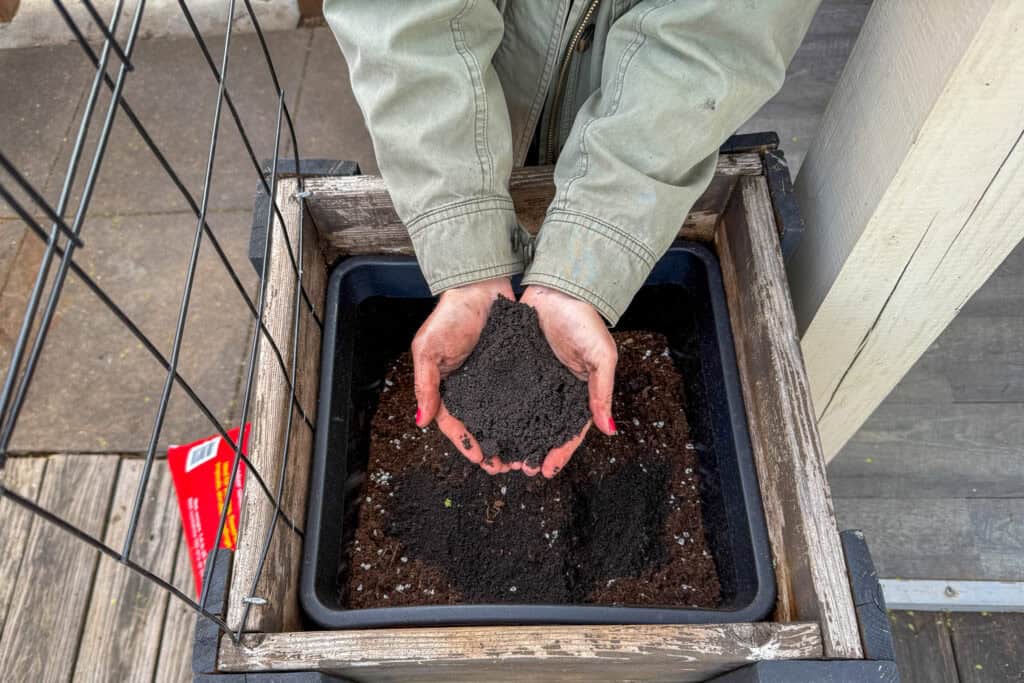
Why Organic Matter Matters So Much in Containers
Organic matter deserves its own section because it does a lot of work in container soil.
In a vegetable container garden, organic matter helps the mix:
- hold moisture more evenly
- retain nutrients better
- support biological activity
- improve the overall texture of the growing medium
That is especially important in containers, where frequent watering can wash nutrients out faster and the total volume of soil is limited.
Ingredients like compost and worm castings can significantly help with this. They make the mix more supportive for plant growth over time.
At the same time, balance still matters. Too much heavy organic material can make a container mix dense and overly wet. So the goal is not to fill a container with straight compost. It is to use organic matter as part of a well-balanced mix.
If you want to compare two of the most common organic amendments, visit Worm Castings vs Compost.
This is one of the biggest reasons they grow best in soil that is loose, rich, and balanced rather than packed down and overly heavy.
Healthy organic matter helps create that middle ground where the mix can hold water and nutrients without becoming suffocating to the roots.
Common Potting Soil Mistakes for Beginners
One of the easiest ways to improve your results is to avoid a few very common mistakes.
The first is using gardening soil or topsoil in a standard container and assuming it will behave the same way it does in the ground. In most cases, it will not. It becomes heavier, drains differently, and can reduce the air space roots need.
The second is assuming all potting soil is automatically perfect for vegetables. Some bags are fine as a base, but vegetables often need more organic matter and more long-term support than a generic flower mix provides.
The third is using too much of a good thing. Straight compost, straight coco coir, or overly moisture-retentive mixes can all create problems when used alone. What usually works best is a balance.
And the fourth is forgetting that container soil changes over time. Watering, root growth, and weather all affect the mix. Potting soil that looked fluffy in spring may not look the same later in the season. That does not mean you failed. It just means container soil needs to be refreshed and managed.
Final Thoughts
If your vegetable container garden has been struggling, the soil is one of the first things you should look at.
In a container, your plants are fully dependent on that mix. It is responsible for holding water, draining excess moisture, creating air space, supporting root health, and helping nutrients stay available long enough for the plant to use them.
That is a big task.
The good news is that once you understand what makes good container soil work, the whole topic starts to feel a lot less confusing.
A container vegetable garden does not need a perfect or overly complicated formula.
It just needs a soil blend that fits the way containers actually behave. If you start with a strong base, make thoughtful improvements, and pay attention to how your plants respond, you will learn a lot quickly.
And when you do that, you make it much easier for your vegetable garden to succeed, whether you are growing herbs on a patio or larger crops in deep containers.
And when your soil is doing its job well, your plants have a much better chance of doing theirs too.
