Coco Coir for Vegetable Gardens: What To Know
If you grow vegetables in containers, you know how expensive bagged potting soil can get.
When you only need a bag or two, it may feel manageable, but once you start filling multiple containers, raised beds, or grow bags, the cost adds up fast.
That’s one of the main reasons I started using coconut coir – commonly called coco coir – for vegetable gardening.
I use coco coir to make my own potting mix instead of relying only on store-bought bagged potting soil.
For me, it’s an easy way to create a lightweight mix that works well for vegetables and helps keep my gardening costs down at the same time.
Gardeners sometimes use peat moss, and coco coir is an alternative to that.
Personally, I prefer coco coir over peat moss for one main reason: peat moss is more acidic and usually needs lime added to balance it out for most vegetable plants.
Let’s talk about what coco coir does well and where it falls short, so it can be a really useful ingredient in your vegetable garden.
What Is Coco Coir?
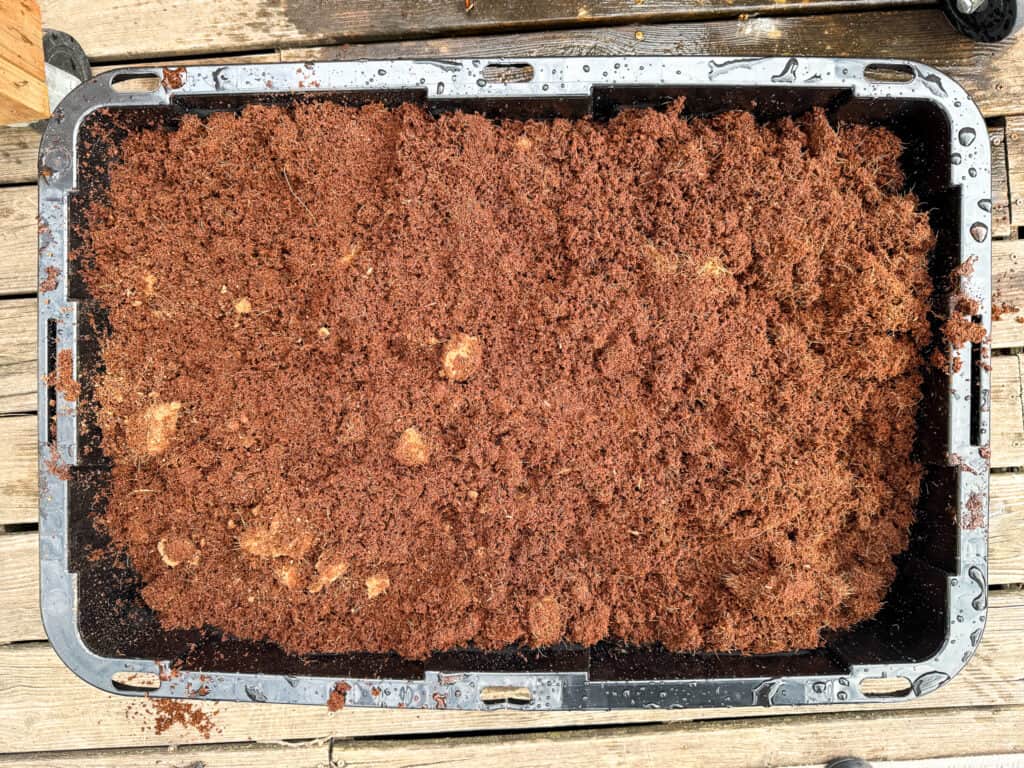
Coco coir, sometimes called coconut coir, is a material made from coconut husks.
In gardening, it is typically used as an ingredient in potting mixes and seed-starting mixes.
It usually comes in compressed bricks or blocks that expand when you add water, though you can also buy it loose in bags.
Once hydrated, coco coir has a soft, fluffy texture that holds moisture well while still staying fairly light.
That makes it especially useful for container gardening, where you want a mix that is easier to handle and does not dry out quite as quickly.
Is Coconut Coir Good For Vegetable Plants?
Yes, coco coir is good for vegetable plants when you use it the right way.
Coco coir is great at holding moisture and improving texture, but it is not a complete potting mix by itself. It gives plant roots a good place to grow, but it does not provide everything vegetables need for strong, healthy growth.
So if you are wondering, is coconut coir good for plants, my answer is yes – especially in containers – but it works best as one part of a larger mix.
I would not treat it like a complete replacement for potting soil.

Why I Use Coconut Coir In My Container Garden
For me, the biggest benefit of coconut coir for plants is that it helps me make my own potting mix at a lower cost.
Buying bagged potting mix for every vegetable garden container can get expensive fast. Coco coir makes it easier to stretch my mix without making it heavy or dense.
And I like that it is easy to work with. Once you hydrate a coir brick, it breaks apart easily, mixes well with compost and drainage materials, and creates a nice texture for container vegetables.
And while every experienced gardener has their own opinion on it, I prefer it to peat moss.
Coco Coir vs Peat Moss
Coco coir and peat moss are essentially used for the same purpose in a potting soil mix.
Peat moss is more acidic and often needs lime added if you are building a mix for vegetables. With coco coir, I do not have to think about that in the same way.
It feels like a simpler ingredient for the type of DIY potting mix I want to make.
Of course, if you are growing a plant that prefers acidic soil, like blueberries, then you would want to consider using peat moss for that soil mix.
Disadvantages Of Coconut Coir
Even though I like using it, there are still some disadvantages of coconut coir gardeners should know about.
It does not feed your plants
This is the biggest one.
Coco coir is not compost, and it is not fertilizer. It helps with moisture retention and texture, but it does not provide the nutrients vegetable plants need.
If you plant straight into coco coir and expect it to act like rich potting soil, your plants will probably struggle.
It still needs drainage ingredients
Because coco coir holds moisture well, it can stay too wet if you do not balance it with something that adds air space and drainage.
That is why I would not use it alone in a container mix. I always pair it with compost and perlite.
Not all coir products are equal
Some coco coir can have salt, sodium, chlorine, potassium, calcium, or magnesium issues depending on processing, so you’ll want to make sure you’re buying horticultural-grade coco coir.
How To Use Coco Coir For Vegetable Gardens
So, what’s the best way to add coco coir in your vegetable garden potting mix?
My tried and true DIY potting mix includes three ingredients:
Then I add fertilizer depending on what I am growing.
Coco Coir For Garden Beds
You can use coco coir for a garden bed, but I think it makes more sense in containers than in established raised beds – unless your raised beds are pretty tall and work more like a container than an in-ground bed.
For example, my raised beds are three feet tall, and I do use coco coir in those when filling them with new potting soil and amending them each year.
That being said, if I am improving a raised bed, compost is usually the first thing I reach for because it adds both organic matter and nutrients. Coco coir can help with texture and moisture retention, but it does not replace the role of compost.
Final Thoughts On Coco Coir For Vegetable Gardening
If you are curious about coco coir for vegetable gardening, I do think it is worth trying.
I use it because it helps me make my own potting mix in a more cost-effective way, it is easy to work with, and I prefer it to peat moss for vegetable gardening.
For my setup, it is one of the simplest ways to build a lighter container mix without paying for bag after bag of store-bought potting soil.
Just remember this: coco coir is an ingredient, not a complete solution.
Used the right way, it can be a really helpful part of a vegetable gardening setup to create the best container garden soil.
But used by itself, it usually leaves out too many of the things vegetables actually need.
If you are building your own mix, coco coir can absolutely earn a place in it.
